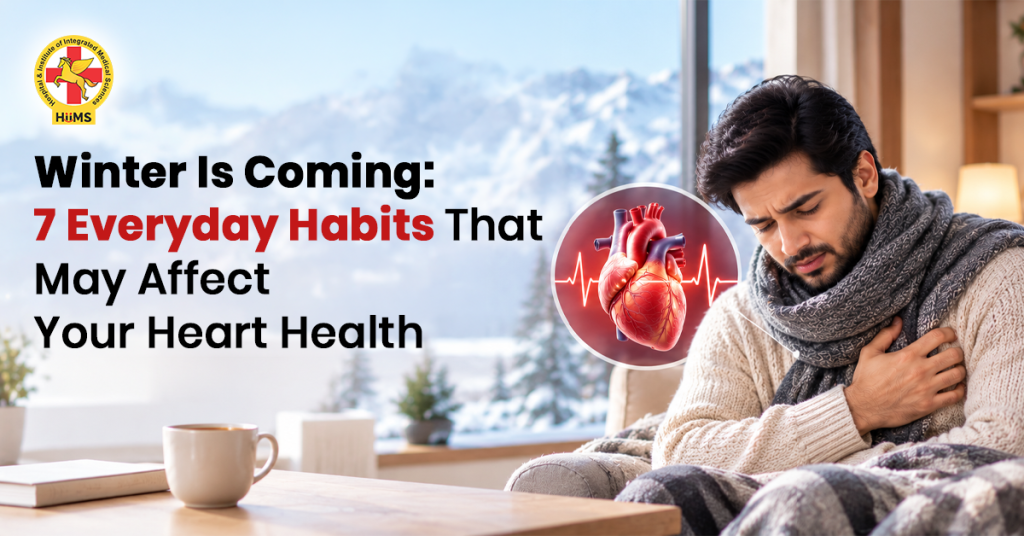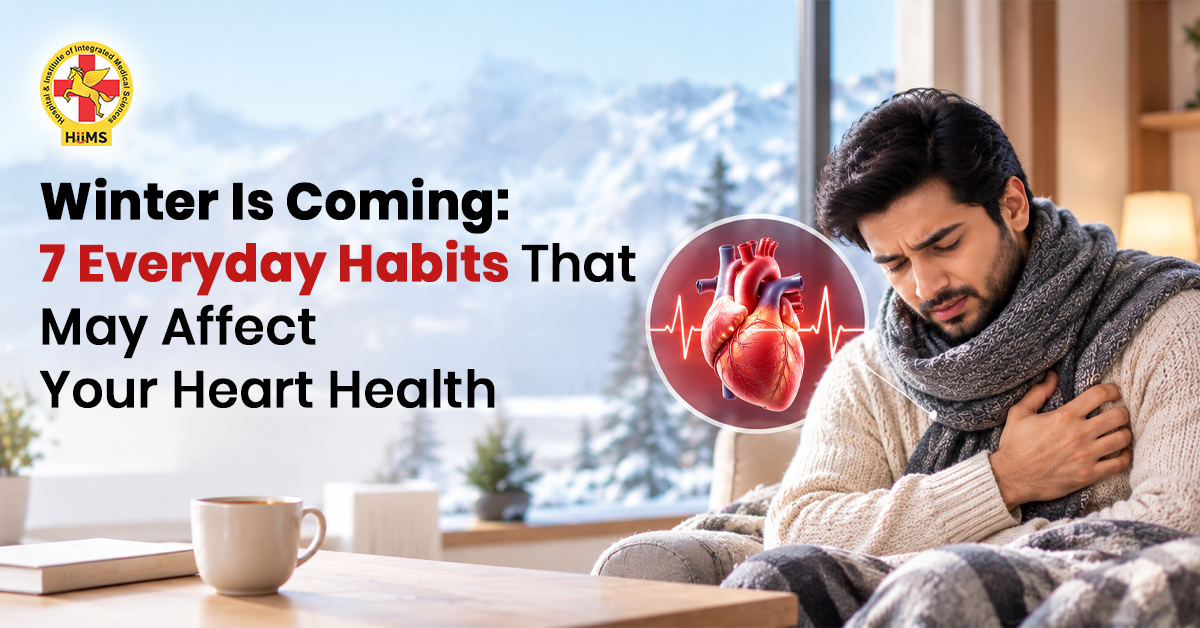

The first cold morning of the year usually sends us looking for a sweater. It is also a good day to give your heart a little attention. Mornings get colder, walks get skipped, and tea and fried snacks show up more often. None of this feels serious, yet these small shifts add up.
In this blog, we talk about heart health in winter in simple terms: what the cold does to the body and seven habits worth looking at.
Table of Contents
How Winter Affects Heart Health
When the temperature drops, your blood vessels narrow to hold on to body heat. The heart then has to push harder to move blood through them. Dr Gajinder Kumar Goyal, a cardiologist at Marengo Asia Hospitals in Faridabad, told Business Standard in December 2025 that this can raise blood pressure by 5 to 10 mmHg in winter.
Other doctors quoted in the same article added that cold air releases stress hormones, that blood becomes slightly thicker, and that less sunlight, less activity and saltier food make things worse.
That is why how winter affects heart health is not only about temperature. Habits change with the season, and the body reacts to both together. People with high blood pressure, diabetes, kidney problems or an existing heart condition feel it most, so looking after your heart health early in the season is worth the effort.
Heart Attack Risk in Winter: Who Should Be Careful
A study from Leeds General Infirmary in the UK, reported by Business Standard, looked at 4,056 people treated for heart attacks. The number of heart attacks was roughly similar throughout the year, but the most severe ones were more dangerous in the colder six months, with the risk of death within 30 days nearly 50% higher.
This was a study from the UK, so the numbers will not match North India exactly, but it explains why doctors take the heart attack risk in winter seriously.
You should be a little more careful if you:
- are above 50, or have a parent who had heart disease
- have high blood pressure, diabetes or high cholesterol
- smoke, or have recently put on weight
- have been told earlier about a blockage or have had a stent
Not sure how your heart is doing this season? Share your reports with a Jeena Sikho HiiMS doctor.
7 Everyday Habits for Better Heart Health This Winter
1. Dress Warmly Before You Step Out
Early morning is the coldest part of the day, and sudden cold exposure can push blood pressure up. Wear layers, cover your head and ears, and give yourself a few minutes indoors before heading out for a walk.
2. Keep Moving, Even Indoors
It is easy to stop walking when it is cold. Try 30 minutes on most days, and if the morning is too cold, walk at home, do yoga or climb stairs. Warm up for five minutes first, because cold muscles and stiff arteries do not like sudden effort, such as shovelling or lifting heavy loads.
3. Choose a Winter Diet for a Healthy Heart
A winter diet for a healthy heart does not need to be boring. Gajar halwa, pakoras and extra ghee are everywhere in these months, and they are fine in small portions, but daily use adds salt, sugar and heavy fat. At Jeena Sikho HiiMS, Acharya Manish Ji’s pH-balanced, plant-based diet follows a two-plate method.
Plate 1 is raw food eaten first, such as seasonal fruit in the morning and a fresh salad at lunch. Plate 2 is cooked food, such as a millet roti with dal and vegetables, eaten after Plate 1. Dinner is kept light and taken before sunset. Millets and seasonal winter vegetables such as spinach, carrot, radish and methi fit in easily.
If you have diabetes or kidney problems, ask your doctor to adjust the fruit quantity and salt before you start.
4. Keep Drinking Water
Few people feel thirsty in winter, but the body still loses water, and thicker blood is not what you want. Sip warm water throughout the day, and keep tea and coffee in check.
5. Check Your Blood Pressure at Home
Since winter can push readings up, a home monitor is a simple way to keep an eye on your heart health. Measure once in the morning and once in the evening, write the numbers down, and show them to your doctor.
In our OPD, we see that people who bring a written log usually get a clearer picture in one visit. Readings consistently above 140/90 mmHg need medical attention.
6. Get Sunlight and Proper Sleep
Short days mean less sun, and low vitamin D is linked by doctors with weaker blood vessel relaxation. Sit in the morning sun for 15 to 20 minutes when you can, and aim for seven to eight hours of sleep.
7. Go Easy on Alcohol, Smoking and Stress
A drink to “warm up” does not actually keep the body warm, and it can interfere with heart and BP medicines. Smoking narrows blood vessels further. A few minutes of slow breathing or meditation every day helps keep stress hormones down.
Winter Heart Attack Prevention: Signs You Should Not Wait On
Winter heart attack prevention starts with the habits above, but it also means knowing when to get help. Please go to a hospital or call emergency services without delay if you have:
- chest pain, pressure or heaviness, especially if it spreads to the arm, jaw or back
- sudden breathlessness or heavy sweating without effort
- dizziness or fainting
- unusual tiredness along with any of the above
Do not drive yourself, and do not wait to see if it passes.
Ayurveda and Heart Care at Jeena Sikho HiiMS
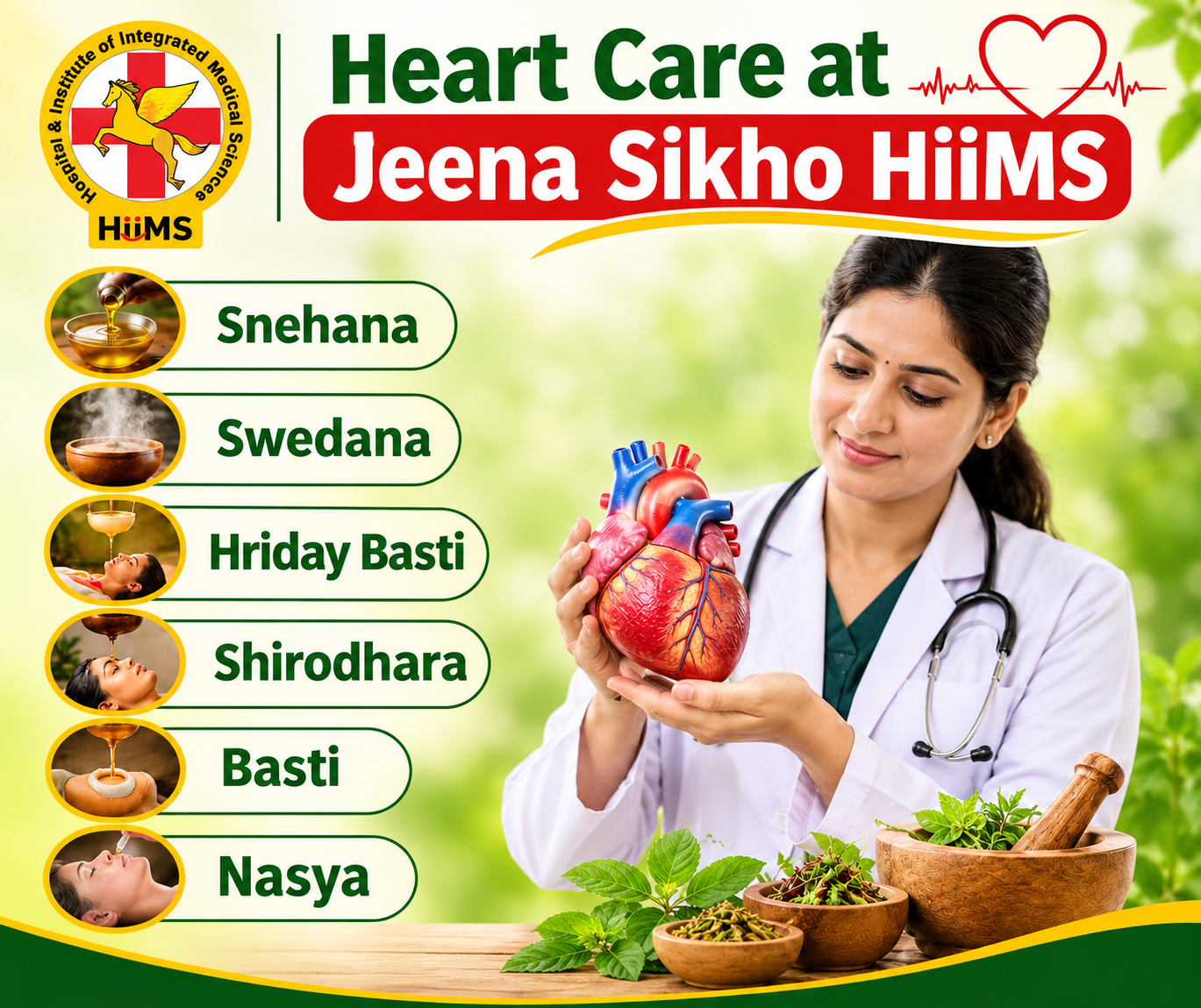
Ayurveda looks at heart health through food, daily routine, herbs and cleansing therapies. At Jeena Sikho HiiMS, the plan starts with an OPD or VOPD consultation, where the doctor goes through your reports, symptoms and current medicines. Then the doctor picks what suits you, since not every therapy is right for everyone.
Heart care at HiiMS is given through Panchakarma and the supportive therapies that go with it. Here is what each one is for:
- Snehana: a massage with warm medicated oil. It is done first to prepare the body for the therapies that follow.
- Swedana: herbal steam or controlled heat, which makes the body sweat gently and supports circulation.
- Hriday Basti: warm medicated oil is kept over the chest region, usually inside a ring of dough, for a set time. HiiMS describes it as a calming therapy for the chest area. It is called “Basti” because the oil is pooled in one place, and it is not an enema.
- Shirodhara: a steady stream of warm oil over the forehead. It is used for relaxation, and it helps people whose stress or sleep affects their blood pressure.
- Basti: a medicated therapy given through the rectum. It is one of the five main Panchakarma cleansing methods, and it is done only under the doctor’s supervision.
- Nasya: herbal oil put in through the nose, another Panchakarma method.
Along with these, the diet is the pH-balanced, plant-based one described above, and the doctor may advise herbs such as Arjuna, Ashwagandha, garlic and turmeric. People with fever, low strength, uncontrolled BP or sugar, or pregnancy should tell the doctor first, because heat and oil therapies may not suit them.
Conclusion
Winter does not have to be a worry for your heart. Dress warm, keep moving, eat lighter, check your blood pressure and know the warning signs. These steps protect your heart health more than any single food or remedy.
If you would like an Ayurveda and diet plan alongside your regular treatment, talk it through with our team, and keep your prescribed medicines going unless your doctor says otherwise.

Reserve a VOPD consultation slot with Jeena Sikho HiiMS and go over your heart reports from home.
FAQs
1. Why do more heart attacks happen in winter?
Cold makes blood vessels narrow and raises blood pressure, so the heart works harder. Heavy food, less activity and less sunlight add to it.
2. Is the early morning risky for the heart in winter?
Mornings are the coldest part of the day, and many cardiologists advise against rushing out for a hard walk or workout straight after waking. Warm up indoors first.
3. Can cold air cause chest pain even if my tests were normal?
Cold can trigger chest discomfort in people with narrowed arteries. If you feel chest pain, pressure or breathlessness, do not guess. Get it checked the same day.
4. Is a very hot bath safe for someone with heart problems?
A sudden change from hot water to cold air can strain the heart. Lukewarm water is a safer choice, and you should dry off and dress warm indoors.
5. Which winter foods are good for the heart?
Spinach, methi, carrots, radish, oats, millets and a small handful of nuts fit well. Keep salt, fried snacks and sweets low.
Ayurvedic Heart Care Products
100% natural, certified Ayurvedic formulations crafted for targeted heart wellness.


Disclaimer: The information provided on this blog is for general educational and informational purposes only. It is not intended to replace professional medical advice, diagnosis, or treatment. Always consult a qualified healthcare professional before making any changes to your diet, lifestyle, or treatment plan. Individual results may vary.