
Have you noticed how fever, body aches, a sore throat, and unusual tiredness seem to appear more often when the weather changes? One day, everything feels normal, and the next, even getting out of bed can feel difficult. Seasonal changes are often associated with an increase in respiratory infections, although the weather itself does not cause every case of fever.
As we know, in Indian households, a warm cup of kadha is a familiar part of seasonal care. Ingredients such as tulsi, ginger and giloy have a long history in Ayurveda, where herbs are selected according to a person’s condition and overall body type (प्रकृति). But which preparations are suitable when fever arises, and what should you know before trying them?
Let’s look at three traditional herbal preparations, what research says about their ingredients, and how Ayurvedic practices can fit into sensible fever care.
Table of Contents
Why Does Viral Fever Become Common During Changing Weather?
Seasonal changes bring changes in temperature, humidity, rainfall, and everyday routines. People may spend more time in enclosed spaces, while changes in air quality and ventilation can affect the spread of respiratory infections. Some viruses also circulate more widely during particular seasons.
A research paper published in Frontiers in Microbiology, discusses how environmental conditions, human behavior, and changes in susceptibility can influence seasonal infection patterns. However, these factors vary between diseases and locations. A change in temperature alone does not account for every seasonal fever.
In India, the monsoon and post-monsoon periods can also bring mosquito-borne infections, including dengue and malaria. These illnesses may start with fever, headache, body pain, and tiredness, making them difficult to distinguish from an ordinary viral infection without medical assessment.
This is why fever should not automatically be labelled seasonal or viral. Traditional home care can help maintain comfort during recovery, but understanding the possible cause is still important.

What is Viral Fever?
Viral fever is a general term for an elevated body temperature caused by a viral infection. Several viruses can cause it, including those responsible for influenza and other respiratory illnesses.
When the body detects an infection, it activates its defence mechanisms. A rise in temperature can form part of this response, although fever itself does not identify which infection is present.
Common symptoms may include:
- An extreme or increased body temperature or chills
- Headache and body aches
- Tiredness, weakness, or a general feeling of being unwell
- Reduced appetite
- A sore throat, runny nose, or cough
- Sweating and discomfort
Not everyone experiences all these symptoms. Some people have mild symptoms for a short period, while others may become seriously unwell.
It is also important to understand that dengue, malaria, typhoid and other infections can cause similar symptoms. A healthcare professional may recommend tests depending on the symptoms, their duration and the infections circulating in the area.
The first step in fever care is to understand what may be causing the fever rather than relying on symptoms alone.

How Does Ayurveda View Fever?
Ayurveda describes fever through the concept of Jwara, a condition discussed in classical Ayurvedic texts. Its traditional approach considers the person’s symptoms, digestion, appetite, daily routine and overall body type when deciding on care.
The three doshas – Vata, Pitta and Kapha, are also recognised within this traditional framework to describe different patterns of bodily function and imbalance. For example, Ayurvedic descriptions may associate Vata-related patterns with chills and body aches, Pitta-related patterns with a sensation of heat and thirst, and Kapha-related patterns with heaviness and mucus.
Ayurvedic care may include dietary adjustments, rest, traditional herbal preparations and other practices selected by a qualified practitioner. The selection depends on the person’s age, symptoms, medical history and current condition.
Common Symptoms of Viral Fever

The symptoms of viral fever can differ from one person to another. Some people mainly experience a raised temperature and tiredness, while others develop several symptoms together.
1. Fever and chills
The temperature may rise and fall throughout the day. Chills can occur even when the body feels hot, particularly as the temperature is increasing.
2. Headache and body aches
Muscle pain, joint discomfort and headaches are common during several viral infections. Their intensity can range from mild discomfort to significant pain.
3. Sore throat and nasal symptoms
A runny or blocked nose, sneezing, throat irritation and coughing may occur when a respiratory virus is responsible.
4. Tiredness and reduced appetite
The body may feel unusually heavy, and food may seem less appealing than usual. Some people also experience nausea.
5. Sweating and dehydration
Fever can increase fluid loss, particularly when caused by sweating, vomiting or diarrhoea. Dry mouth, dizziness and reduced urination may indicate dehydration.
Why Can Fever Increase During Seasonal Change?
The connection between changing weather and infection is more complicated than it may appear.The research paper Factors Influencing the Seasonal Patterns of Infectious Diseases examines several possible explanations, including environmental conditions, indoor crowding, humidity and seasonal changes in human behaviour. It also discusses how temperature and moisture can affect the survival and transmission of some certain pathogens.
These outcomes help explain why some infections follow seasonal patterns. However, the pattern differs according to the pathogen, climate and local living conditions.
In India, several factors can overlap during seasonal changes:
- Changes in respiratory infections: Some viruses circulate more widely at particular times of the year.
- Rainfall and standing water: Water collecting around homes can create suitable breeding conditions for mosquitoes that transmit dengue and other infections.
- Crowded indoor spaces: Poor ventilation and close contact can make it easier for respiratory infections to spread.
- Changes in daily habits: Sleep, hydration, physical activity and time spent indoors may change with the weather.
Simple precautions, including regular handwashing, good ventilation, adequate sleep and mosquito-bite prevention, can help reduce exposure to certain infections.
What is Ayurvedic Kadha, and How Can It Help During Fever?
Kadha is a traditional herbal decoction prepared by boiling selected plant ingredients in water. In Ayurveda, the choice of herbs and the method of preparation can vary according to the intended use and the person’s condition.
Unlike an ordinary cup of tea, a decoction may involve simmering plant materials to extract compounds into the water. Its ingredients, proportions and preparation method influence the resulting drink.
How Can It Help?
Tulsi, ginger, giloy and other herbs appear in traditional Indian preparations. Their familiar flavours make herbal drinks a common part of household routines, particularly during fever, colder weather or when the throat feels uncomfortable.
However, there is an important distinction between traditional use and proven treatment. A kadha may form part of a person’s comfort routine, but there is not enough clinical evidence to establish that a particular kadha reliably treats viral fever or shortens every infection. For this reason, the following preparations should be understood as traditional herbal drinks, not as proven fever cures.
3 Ayurvedic Kadhas to Know About During Seasonal Changes
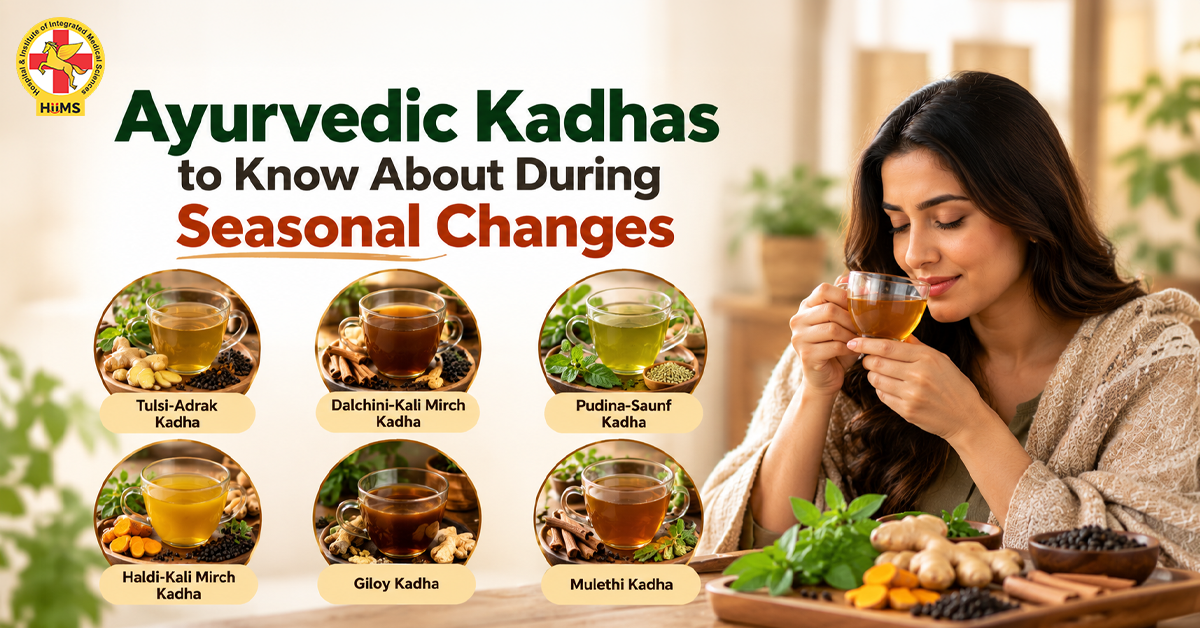
1. Parijat or Chirayata and Giloy Kadha
Parijat and chirayata are plants used in different traditional herbal practices. Giloy, also known as Guduchi, is another herb recognised in Ayurveda.
How to prepare:
- Start with 200 ml of water.
- Add parijat leaves or chirayata, along with a small piece of giloy stem.
- Simmer the mixture until the water has reduced to 50ml.
- Strain it before use.
2. Tulsi and Ginger Herbal Kadha
Tulsi and ginger are familiar ingredients in Indian kitchens and traditional herbal preparations. Their flavour makes them suitable for a simple warm drink, particularly when a person has a scratchy throat or wants something warm and comforting.
Ingredients:
- A few fresh tulsi leaves
- A small slice of fresh ginger
- One cup of water
Preparation:
- Wash the tulsi leaves and ginger.
- Add them to a pan containing two cups of water.
- Heat the water gently until it reduces to 1 cup.
- Strain the drink and allow it to cool to a comfortable temperature before sipping.
What Does Research Say About Tulsi?
A randomised, double-blind, crossover study published in the Journal of Ethnopharmacology investigated the immunomodulatory effects of a tulsi leaf extract in healthy volunteers.
The study included 24 volunteers, with results from 22 participants analysed. Researchers reported positive changes in selected immune measurements after four weeks of taking the extract.
3. Jeena Sikho 32 Herbs Tea

Jeena Sikho 32 Herbs Tea is a herbal infusion containing a combination of traditional ingredients. The combination includes tulsi, giloy, mulethi, sonth, dalchini, green tea leaves, and other herbs.
It can be considered as an option for people who enjoy herbal drinks as part of their daily routine.
The preparation of the tea is as follows:
- Take 2–3 g of Jeena Sikho 32 Herbs Tea and add it to a cup of hot water.
- Let it sit for a few minutes until the water picks up the flavour of the herbs.
- Strain the tea if needed and give it a little time to cool.
- If you like, add a little honey or your preferred sweetener before drinking.
What Does Scientific Research Say About Kadha?
There is growing interest in studying traditional herbal preparations, including their plant compounds and possible biological effects. However, the strength of the evidence depends on what researchers actually tested.
A paper by Dharmendra Kumar Maurya and Deepak Sharma, published in 2020, examined traditional Ayurvedic kadha in relation to SARS-CoV-2 using in-silico methods. The researchers used computer-based molecular docking and related predictions to investigate how selected plant compounds might interact with viral and human proteins.
The paper discusses compounds found in herbs such as tulsi, giloy, ginger, turmeric and black pepper. Some of the compounds showed predicted interactions with selected molecular targets in the computer models.
For a responsible Ayurvedic healthcare approach, the focus should remain on selecting suitable preparations, checking their safety and recognising when medical investigation is necessary.
How to Use Kadha Safely During Seasonal Fever
Herbal preparations are not automatically safe for everyone. The type of herb, the amount consumed, the preparation method and the person’s existing health conditions all matter.
Keep the following precautions in mind. Such as:
- Choose ingredients carefully: Use correctly identified ingredients from a reliable source. Do not substitute one plant for another simply because their names or traditional uses appear similar.
- Avoid concentrated preparations without guidance: A homemade decoction may contain a higher concentration of plant compounds than an ordinary herbal drink. Do not assume that stronger is better.
- Check for interactions: Some herbs can interact with prescription medicines or affect the liver, blood pressure or other aspects of health. Tell your healthcare professional about any herbal products you use.
- Take extra care with children and older adults: Children, older adults, pregnant people and individuals with chronic health conditions may need additional precautions. Do not give a child a medicinal herbal preparation without appropriate professional advice.
- Do not use kadha as a reason to delay treatment: If fever is high, persistent or accompanied by worrying symptoms, seek medical assessment. A kadha cannot establish whether the cause is viral, bacterial or mosquito-borne.

Fever Care at Jeena Sikho HiiMS: An Ayurvedic Approach
At Jeena Sikho HiiMS, fever care follows an Ayurvedic approach that includes traditional practices, herbal preparations and dietary guidance. Acharya Manish Ji has shared a protocol that includes Lower Leg Hot Water Immersion Therapy, along with a herbal kadha discussed earlier in this blog.
Lower Leg Hot Water Immersion Therapy
Acharya Manish Ji’s protocol involves using two buckets of water to keep the feet immersed in warm water.
How to follow the practice:
- Prepare two buckets: Fill one bucket with warm water and keep another bucket of hot water nearby.
- Check the temperature: Keep the water at around 42°C.
- Immerse your feet: Place both feet in the warm water, keeping the water level below the knees.
- Maintain the warmth: As the water cools, gradually add hot water from the second bucket. Take care not to pour hot water directly onto your feet.
- Follow the recommended duration: Continue the immersion for at least 30-40 minutes.
Watch the full video:
Along with this practice, the herbal kadha discussed earlier may be considered as part of traditional Ayurvedic fever care, depending on the person’s condition and a qualified practitioner’s advice.
Dietary Care During Fever
Staying hydrated is important when you have a fever. Coconut water and other suitable fluids may help maintain fluid intake. Light meals that suit your appetite can also help you meet your nutritional needs while you recover.
An Integrated Approach to Fever Care
At Jeena Sikho HiiMS, traditional Ayurvedic practices are considered according to each person’s needs. Since fever can have different causes, proper assessment helps determine the care required. These practices should not replace medical evaluation or delay necessary testing and treatment.
If a fever persists, worsens or occurs with difficulty breathing, confusion, a severe headache or signs of dehydration, look for prompt medical attention.
Herbal and Dietary Support During Fever
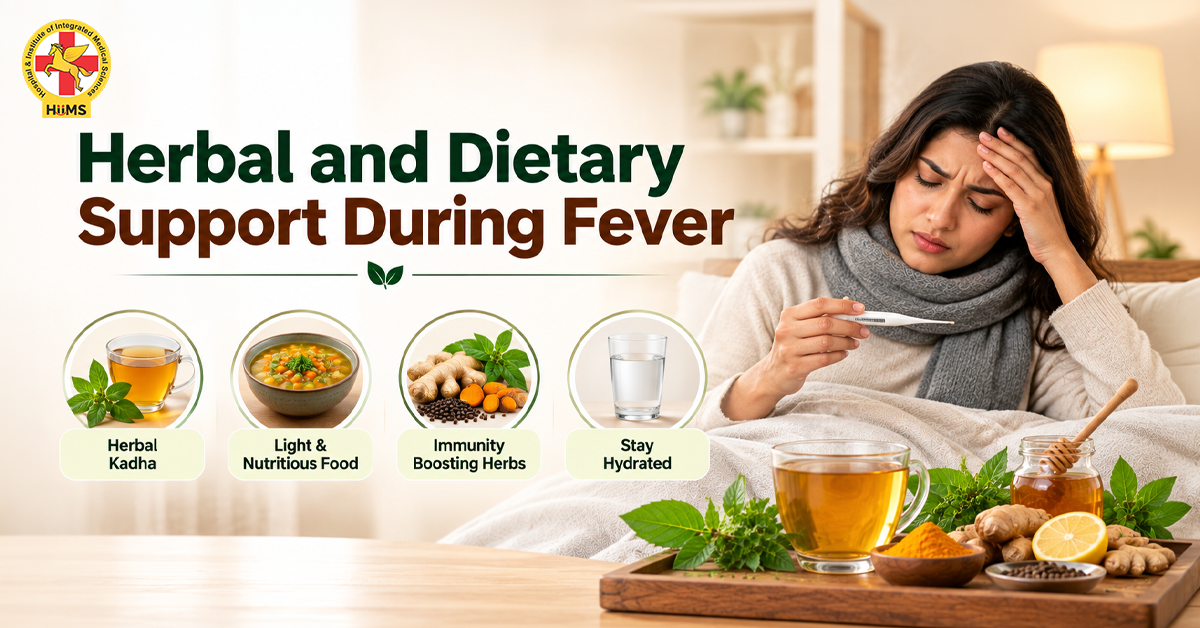
When fever affects appetite and energy, simple food and proper fluid intake can make day-to-day care easier.
Ayurvedic dietary practices often emphasise choosing food according to the person’s digestion, appetite and current condition. The same principle can guide practical decisions at home, provided the person continues to receive appropriate care.
- Warm water: Sip water regularly throughout the day. If you prefer warm water, drink it at a comfortable temperature rather than making it excessively hot.
- Tulsi infusion: A mild tulsi infusion can be an optional warm drink for someone who handles tulsi well. It should not be relied on to treat the underlying infection.
- Ginger tea: A small amount of ginger can add flavour to a warm drink.
- Honey and lemon water: Honey and lemon can make warm water more palatable.
- Khichdi and vegetable soup: Soft, simple meals such as khichdi, dal or vegetable soup may be easier to eat when the appetite is low. Adjust the portion according to what the person can comfortably tolerate.
Exploring Ayurvedic Products During Fever Recovery
Along with rest, fluids, and light meals, some people also want to consider Ayurvedic products as part of their care routine during seasonal illness. However, the right choice will always depend on the person’s symptoms, health condition, and the ingredients in the formulation. Herbal products should be selected carefully, especially when someone is already taking medication.

For those interested in learning more about Ayurvedic formulations, Jeena Sikho offers the Fever Care Support Combo, which brings together Fiv Liv Plato Drops and the Pet Yakrit Pleeha Shuddhi Kit. Fiv Liv Plato Drops contain herbs such as giloy and amla, while the Pet Yakrit Pleeha Shuddhi Kit includes traditional ingredients used in Ayurvedic digestive and liver care.
Before choosing this combo, it is important to understand what each product contains and how it is intended to be used. An Ayurvedic physician can help determine whether these products are suitable for your individual needs.
Explore the Jeena Sikho Fever Care Support Combo to learn more about its ingredients and directions for use.
When Should You Consult a Doctor for Viral Fever?
It is not always possible to identify the cause of fever from symptoms alone. Seek medical advice if the fever persists, symptoms worsen or you are uncertain about the cause.
Prompt medical attention is particularly important if you experience:
- Difficulty breathing or chest pain
- Severe headache with a stiff neck
- Confusion, unusual drowsiness or seizures
- Persistent vomiting or an inability to drink
- Very little urination or other signs of dehydration
- Severe abdominal pain
- Bleeding from the nose or gums, or blood in vomit or stool
- A fever that improves and then returns with worsening symptoms
These warning signs can indicate a serious illness and should not be managed with home remedies alone.
Dengue deserves particular attention in India. The World Health Organization advises seeking immediate health care for warning signs such as severe abdominal pain, persistent vomiting, rapid breathing, bleeding, extreme weakness or cold, pale skin. Warning signs can develop even after the fever starts to settle.

Lifestyle Practices During Fever
Alongside appropriate treatment, everyday habits can help make recovery more manageable.
Get adequate rest. Avoid strenuous exercise and give yourself time to recover rather than trying to maintain your usual schedule.
Drink fluids regularly. Water, soup and other suitable fluids can help replace losses caused by sweating. Oral rehydration solution may be appropriate in certain situations, particularly when vomiting or diarrhoea causes fluid loss.
Keep your surroundings comfortable. Wear light, comfortable clothing and maintain a pleasant room temperature. Avoid extreme heat or cold.
Maintain basic hygiene. Wash your hands regularly, cover coughs and sneezes, and improve indoor ventilation when possible. Stay away from others while you are unwell if you may have a contagious respiratory infection.
These practical measures complement appropriate care. They do not replace a medical assessment when one is needed.
Diet After Fever: A Step-by-Step Approach to Recovery
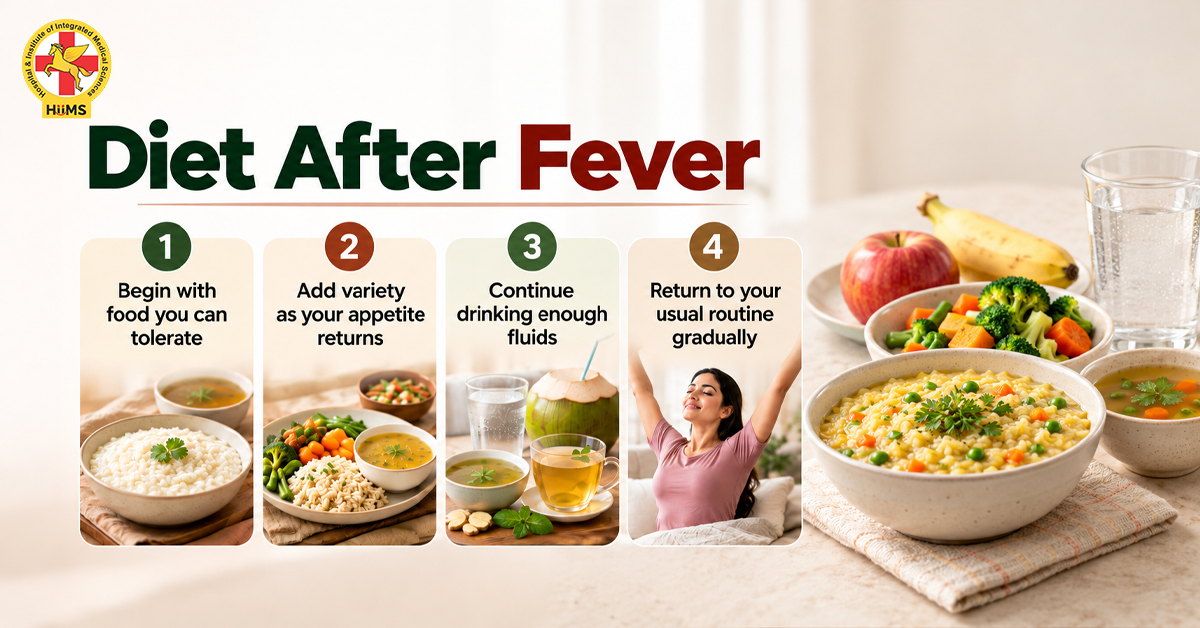
It is common to feel tired or have a reduced appetite even after the temperature returns to normal. Recovery may take longer than the fever itself, depending on the infection and the person’s general health.
Rather than following a strict diet, return to regular meals gradually as your appetite improves.
Step 1: Begin with food you can tolerate.
If your appetite remains low, try smaller portions of khichdi, dal, vegetable soup or other familiar foods that sit comfortably with you.
Step 2: Add variety as your appetite returns
Gradually include suitable fruits, vegetables, grains and protein-containing foods. There is no need to follow a highly restrictive diet unless a healthcare professional has recommended one for a specific reason.
Step 3: Continue drinking enough fluids
Keep water and other appropriate drinks available throughout the day. If you have been vomiting or experiencing diarrhoea, ask a healthcare professional whether an oral rehydration solution is suitable.
Step 4: Return to your usual routine gradually
Begin with light daily activities and increase them as your strength returns. If tiredness persists or symptoms return, seek medical advice rather than assuming that more rest alone will resolve the problem.
Where Does Langhana Fit into Ayurvedic Practice?
In Ayurveda, there is a well-known saying, “Langhanam Param Aushadham,” which means that, in suitable circumstances, lightening the body’s burden can be an important part of care. Langhana refers to traditional approaches that may include lighter meals and dietary adjustments, depending on a person’s condition.
In the context of fever, this principle is often discussed in relation to digestion and appetite. When someone has a fever and does not feel like eating much, Ayurveda may favour simple, light food rather than heavy meals. The idea is to adapt food intake to the person’s needs instead of forcing large meals when their appetite is low.
Can Ayurveda and Modern Medical Care Work Together?
Ayurveda offers a traditional way of understanding health through diet, daily habits, herbs and individualised care. Many people value these practices because they form part of their family traditions and everyday routines.
Modern medical care, meanwhile, provides diagnostic tests and treatments that are important for identifying and managing infections. Neither system should be represented inaccurately, and treatment decisions should be based on the person’s needs.
It is also worth remembering that natural does not automatically mean harmless. Herbal ingredients contain active compounds, and some can cause side effects if you overuse them. The same principle applies to conventional medicines: they can have side effects and other drawbacks.
An informed approach allows people to explore Ayurvedic care while recognising the value of timely diagnosis and evidence-based treatment. The goal is to choose care that is appropriate for the condition.
Conclusion
Changing weather often coincides with an increase in seasonal infections, and fever can leave you feeling tired, uncomfortable and less interested in food. Traditional Ayurvedic preparations made with tulsi, ginger, giloy and other herbs remain familiar parts of Indian household care.
Rest, proper water intake, suitable food and attention to warning signs remain important. If the fever persists or symptoms become concerning, seek medical advice instead of relying on a kadha alone.

Ayurveda can be explored as part of an individualised healthcare plan, with appropriate professional guidance and without delaying necessary medical treatment. For personalised guidance on Ayurvedic care for fever, book a VOPD online video consultation with Jeena Sikho HiiMS.
FAQs
1. Which herbs are commonly used in Ayurvedic kadha for fever?
Tulsi, ginger, giloy, Parijat, and Chirayata are used in traditional preparations, depending on the recipe.
2. What should I eat when I have a fever?
Choose foods that are easy to eat and drink enough fluids. If you have a poor appetite, try small meals rather than forcing yourself to eat a lot.
3. What does “Langhanam Param Aushadham” mean in Ayurveda?
It refers to the traditional principle of lightening the body’s burden when appropriate, which may include eating lighter meals according to your condition.
4. When should I see a doctor for a fever?
Seek medical advice if your fever persists, gets worse or comes with symptoms such as difficulty breathing, confusion or signs of dehydration.
5. Can I consult Jeena Sikho HiiMS online for fever care?
Yes, you can book a VOPD consultation with Jeena Sikho HiiMS to discuss your symptoms and receive individual guidance.
References and Research Sources
https://pmc.ncbi.nlm.nih.gov/articles/PMC4869589/
https://www.njcmindia.com/index.php/file/article/view/1083/847Read the research paper

Disclaimer: The information provided on this blog is for general educational and informational purposes only. It is not intended to replace professional medical advice, diagnosis, or treatment. Always consult a qualified healthcare professional before making any changes to your diet, lifestyle, or treatment plan. Individual results may vary.