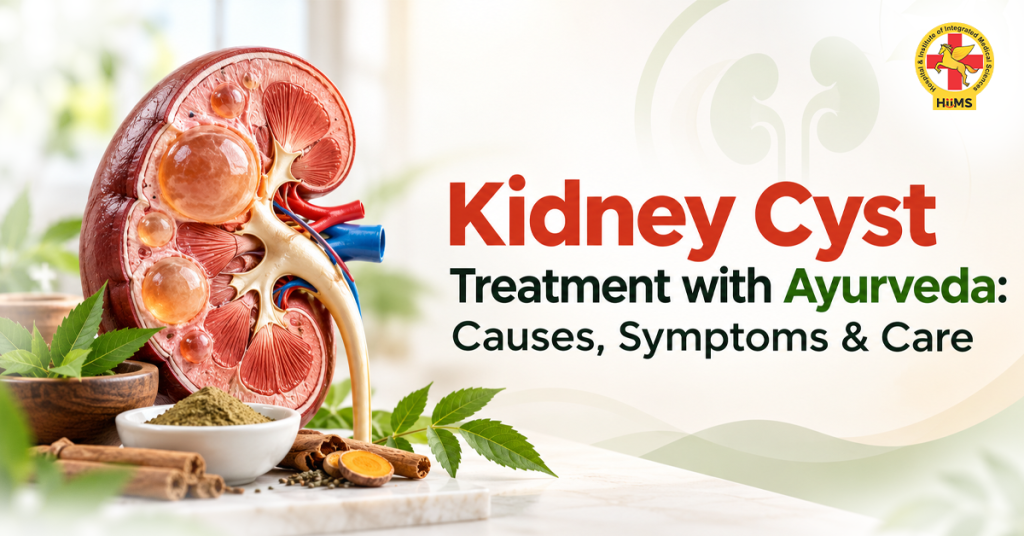

A kidney cyst can look concerning on a routine report, especially when you were not expecting to find anything unusual in your kidneys. Actually, it is usually a fluid-filled sac that develops in or on the kidney, and many cysts do not disturb kidney function or cause any noticeable problem.
And the situation changes when a cyst becomes large, causes pain, gets infected, affects urine flow, or has features that need closer examination. That is why kidney cyst treatment should start with understanding the type of cyst and what your reports actually show, rather than choosing a treatment simply because the word “cyst” sounds serious.
In this blog, you will learn about the common causes and symptoms of kidney cysts, when treatment may be considered, and how an individualised Ayurvedic and integrated approach can fit into kidney care.
Did You Know? About 1 in 10 people have simple kidney cysts, while the figure rises to nearly 1 in 5 among people aged 50 and above, according to NIDDK.
Table of Contents
What Is a Kidney Cyst?
A kidney cyst is a fluid-filled sac that forms within or around the kidney. Simple cysts are generally harmless, and actually many people discover them accidentally during an ultrasound or any other scan done for a different health concern.
Simple Cyst or Complex Cyst?
This difference has importance because doctors do not treat every cyst in the same way. A simple cyst has features that generally suggest a harmless finding, while a complex cystic mass may contain features that require closer imaging or follow-up.
The Bosniak classification helps doctors describe cystic renal masses on imaging and assess which findings are more likely to be harmless and which need further examination.
Need clarity and more information about your kidney scan? Get your reports reviewed by a qualified doctor before deciding on any kind of treatment.

What Causes a Kidney Cyst?
The exact cause of normal kidney cysts is still not fully understood. However, they become more common as people grow older, and studies have also found them more frequently in men than women.
It is also important to separate a simple cyst from inherited conditions such as polycystic kidney disease, where multiple cysts develop because of genetic changes. These conditions need a different type of healthcare assessment and should not be grouped together under one term.
Kidney Cyst Symptoms: What Should You Watch For?
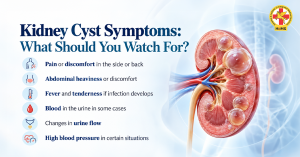
Many cysts produce no symptoms at all. When a cyst becomes larger or causes a complication, however, the person may begin noticing changes that deserve careful observation.
Common kidney cyst symptoms may include:
- Pain or discomfort in the side or back
- Abdominal heaviness or discomfort
- Fever and tenderness if infection develops
- Blood in the urine in some cases
- Changes in urine flow
- High blood pressure in certain situations
These symptoms can also occur with kidney stones, urinary infections, and other conditions, so it is better to identify the actual cause instead of assuming that every symptom comes from a cyst.
How Is a Kidney Cyst Diagnosed?
Doctors generally use imaging to understand what a kidney cyst looks like. An ultrasound can identify many simple cysts, while CT or MRI may provide more detail when the appearance needs further clarification.
Blood tests may also help assess kidney function, particularly when the person has other kidney concerns. The important point is that treatment for kidney cyst should follow proper assessment of the cyst and the person’s overall kidney health.
Does Every Kidney Cyst Need Treatment?
Not every cyst needs active treatment. When a simple cyst causes no symptoms and does not affect kidney function, doctors may recommend observation and follow-up imaging instead of immediately performing a procedure. When a cyst causes persistent pain, blocks urine or blood flow, becomes infected, bleeds, or shows concerning features on imaging, further treatment may become necessary.
These procedures can be useful when there is a clear medical reason for intervention, but they are not completely free of procedural considerations. Research on aspiration and sclerotherapy and laparoscopic treatment has reported recurrence and procedure-related complications.
For this reason, treatment decisions should be based on the cyst’s features and symptoms rather than fear alone.
Kidney Cyst Treatment with Ayurveda: An Integrated Approach
Ayurveda looks at a person’s health as a whole, including food habits, digestion, daily routine, physical activity and individual constitution. In a clinical manner, Ayurvedic treatment for kidney cyst should therefore be presented as an individualised supportive approach rather than a claim that Ayurvedic medicines can dissolve every cyst.
The first step is reviewing the available reports and understanding the person’s symptoms, kidney function, medicines and other health conditions. From there, diet correction, routine changes and selected Ayurvedic therapies may be considered according to the individual’s needs.

Panchakarma and Supportive Therapies
- Panchakarma: Selected Panchakarma procedures may form part of an Ayurvedic care plan when the doctor considers them appropriate for the person’s overall condition.
- Basti: This Ayurvedic therapy uses medicated preparations and is selected according to individual assessment rather than being given routinely to every patient.
- Swedana: A supervised warm or herbal steam therapy that may be included as part of a broader Ayurvedic programme.
- Abhyanga: An oil-based Ayurvedic therapy commonly used for relaxation and general body care within an individual treatment plan.
- Dietary guidance: Food choices are adjusted according to the person’s health status, kidney function and treatment plan rather than following the same diet for everyone.

How Jeena Sikho HiiMS Approaches Kidney Care
At Jeena Sikho HiiMS, the hospital philosophy is an integrated approach. Combining Ayurveda with naturopathy, Panchakarma, diet and lifestyle guidance, modern diagnosis, and other supportive therapies with OPD, daycare, HiiMS@home and IPD services.
When Should You See a Best Kidney Specialist?
Persistent side or back pain, fever, blood in the urine, new urinary problems, swelling, abnormal kidney-function results, or a cyst that has been described as complex should not be put aside.
The best kidney specialist at Jeena Sikho HiiMS for your situation should be someone who can properly review your reports, explain what the findings mean, and guide you towards suitable monitoring or treatment.
Conclusion
A kidney cyst does not automatically mean that a person needs surgery or intensive treatment. Simple cysts that cause no symptoms may only need observation, while painful, infected, obstructive, or complex findings can require closer healthcare attention.
This is why kidney cyst treatment should always start with a proper diagnosis and a clear understanding of the cyst’s characteristics. Ayurveda can be included as part of an individualised integrated care plan, particularly through diet, routine correction, and selected therapies under professional supervision.
At Jeena Sikho HiiMS, you can also opt for a VOPD consultation with expert doctors and discuss your kidney health concerns from the comfort of your home.

FAQs
Q1: Can a kidney cyst affect kidney function?
Large or complicated cysts can sometimes interfere with normal kidney function, while most simple cysts do not cause this problem.
Q2: What tests are commonly used for a kidney cyst?
Doctors may use ultrasound, CT or MRI along with blood tests when they need to assess the cyst and kidney function.
Q3: When does a kidney cyst need treatment?
Treatment may be considered when a cyst causes symptoms, infection, bleeding, obstruction, or other complications rather than simply because a cyst is present.
Q4: Can Ayurveda be included in kidney cyst care?
An Ayurvedic approach can be discussed as part of individualised supportive care after the cyst and overall kidney health have been properly assessed.
Q5: When should I consult a kidney specialist?
Persistent pain, fever, blood in urine, urinary changes, or an unusual imaging report are reasons to seek professional kidney evaluation.

Disclaimer: The information provided on this blog is for general educational and informational purposes only. It is not intended to replace professional medical advice, diagnosis, or treatment. Always consult a qualified healthcare professional before making any changes to your diet, lifestyle, or treatment plan. Individual results may vary.