
Your body actually needs cholesterol to build healthy cells, to keep you strong and to produce essential hormones. The problem begins when the wrong fats build up in your blood from heavy foods, lack of movement and poor digestion.
In this blog, you will know how following a balanced diet for high cholesterol allows you to manage your numbers by making simple, delicious and smart choices in your daily meals. You will learn what to eat and what to avoid to keep your heart healthy.
Table of Contents
Understanding Good vs Bad Cholesterol
To make smart food choices, it helps to understand how cholesterol works in your body.
Bad Cholesterol (LDL): Think of this as the heavy, sticky fat. When you have too much of it floating around, it can slowly stick to the inner walls of your blood pipes. Over time, this makes it harder for blood to flow smoothly.
Good Cholesterol (HDL): Think of this as your body’s internal cleaning crew. It travels through your bloodstream, picks up excess bad cholesterol and carries it back to your liver to be flushed out naturally.
Triglycerides: This is another form of fat created when you eat more sugar, bakery items or refined flour than your body can burn for energy.
Your main goal should be to eat foods to lower cholesterol that boost your internal cleaning crew (HDL) and reduce the sticky buildup (LDL).
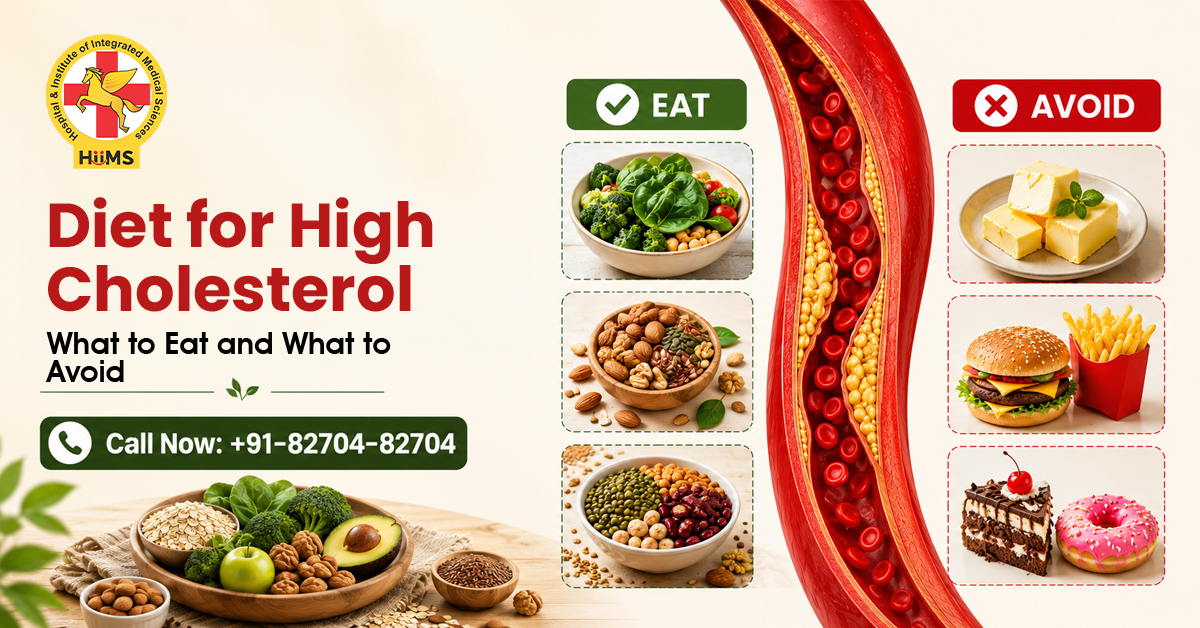
What to Eat: Foods That Help Lower Cholesterol
You do not need to starve yourself to lower your numbers. Instead, building a proper high cholesterol diet focuses on adding clean, fiber-rich, and nourishing real foods to your daily meals.
High Fiber Whole Grains
Fiber is your best friend when it comes to clearing out excess fats. Soluble fiber works like a soft sponge inside your stomach, it soaks up bad cholesterol and carries it out of your body before it enters your blood. Eating oats, barley, broken wheat (daliya), or whole millets like jowar and bajra is a great way to start your day. Swapping your morning white bread for a warm bowl of vegetable daliya or oatmeal makes a huge difference.
Fresh Fruits and Seasonal Vegetables
Fresh produce is packed with natural antioxidants and plant fiber that keep your blood vessels clean and flexible. Focus on eating apples, pears, papaya, berries and oranges every day. For vegetables, choose watery and green options like bottle gourd, cucumber, carrots, spinach and bitter gourd (karela). Try to fill half of your lunch plate with fresh raw salad or cooked green vegetables.
Plant Proteins and Legumes
Animal meats often come with heavy saturated fats that increase cholesterol. Switching some of your meals to clean plant proteins gives your body strength without the extra fat burden. Excellent options include yellow moong dal, red lentils (masoor), chickpeas, and kidney beans (rajma). A light bowl of warm moong dal soup makes a perfect, easy-to-digest dinner.
Healthy Kitchen Herbs and Spices
Your kitchen spice box contains powerful natural remedies that boost your digestive fire and help your body process fats smoothly. Ingredients like fresh garlic, turmeric, ginger and fenugreek (methi) seeds work wonders for blood flow. Eating one small piece of crushed raw garlic or drinking warm water soaked with methi seeds in the morning helps support healthy digestion.
What to Avoid: Foods That Can Raise Cholesterol
Just as important as adding good items is stepping away from foods that clog your system and slow down your digestion when managing a diet for high cholesterol.
Deep-Fried and Packaged Snacks
Deep-fried items like samosas, french fries, chips, and packaged snacks are cooked in low-quality oils at high heat. These damaged fats raise your bad cholesterol quickly and strain your liver. Stepping away from fried street foods and commercial chips is one of the fastest ways to improve your blood numbers.
Heavy Dairy and Fatty Meats
Full-fat dairy products and red meats carry high amounts of saturated fats that stay in your bloodstream for a long time. Limit whole milk, heavy cream, butter, commercial cheese, and fatty meats. You can use small amounts of homemade buttermilk or light curd instead of heavy cream or butter.
Refined Flour and Sugary Treats
Maida (refined wheat flour) and white sugar have zero fiber. When you eat bakery cakes, pastries, biscuits, white bread, or sweet sodas, your liver turns that excess sugar directly into triglycerides.
Reused Cooking Oils
Reheating the same cooking oil multiple times breaks down its natural structure and creates harmful compounds that hurt your heart and blood vessels. Never reuse oil that has already been fried once, and always cook with small amounts of fresh, cold-pressed oils.
Daily habits that keep your heart healthy
Eating right is the biggest step, but when you combine your diet for high cholesterol with simple everyday habits, you get faster and lasting results:
Stay Active Daily: You don’t need to go to the gym. Taking a brisk walk for 30 to 45 minutes each day helps your body to naturally produce more good cholesterol.
Drink Warm Water: Drinking warm water during the day keeps your digestion functioning and helps flush out metabolic waste after you eat.
Manage daily stress: High stress levels release cortisol that interferes with fat metabolism and increases blood pressure. 10 minutes of simple deep breathing exercises or meditation can work very well.
Good Sleep: Try to get 7 to 8 hours of good quality sleep each night so your liver and organs have time to repair and function properly.
Conclusion
The best diet for high cholesterol is about making simple, practical choices every day. Fill your plate with fresh fruits, vegetables, whole grains and light lentils and step away from heavy fried foods and you give your body everything it needs to heal naturally.
If you require guidance, wellness centers like Jeena Sikho HiiMS offer customised dietary support to help reverse hidden metabolic problems. You can also consult experts from home through HiiMS VOPD and get a tailor made plan. A healthy diet for high cholesterol will build a strong heart and keep you energetic for years to come.

FAQ
1. How long does it take to lower cholesterol by following a high-cholesterol diet?
Most people start seeing noticeable improvements in their blood test results within 6 to 12 weeks of eating more soluble fiber and walking daily.
2 Is pure cow ghee completely forbidden if I have high cholesterol?
No, you do not need to cut out all fat-having half a teaspoon of pure cow ghee on warm meals is fine for digestion.
3. Can emotional stress raise my cholesterol even if I eat clean foods?
Yes, long-term stress releases hormones that slow down fat metabolism and raise blood numbers even on a healthy diet.
4. How does Jeena Sikho HiiMS VOPD help people manage their cholesterol levels from home?
Through Jeena Sikho HiiMS VOPD, health experts review your blood reports virtually and guide you with personalized dietary and lifestyle shifts.
5. What is the single easiest daily habit to start lowering cholesterol today?
Swapping refined morning foods for fiber-rich oats or daliya and taking a 30-minute brisk walk every day is the easiest starting step.
References & Sources
- https://www.betterhealth.vic.gov.au/health/conditionsandtreatments/cholesterol-healthy-eating-tips
- https://www.mayoclinic.org/diseases-conditions/high-blood-cholesterol/in-depth/cholesterol/art-20045192
- https://www.heart.org/en/health-topics/cholesterol/hdl-good-ldl-bad-cholesterol-and-triglycerides

Disclaimer: The information provided on this blog is for general educational and informational purposes only. It is not intended to replace professional medical advice, diagnosis, or treatment. Always consult a qualified healthcare professional before making any changes to your diet, lifestyle, or treatment plan. Individual results may vary.