
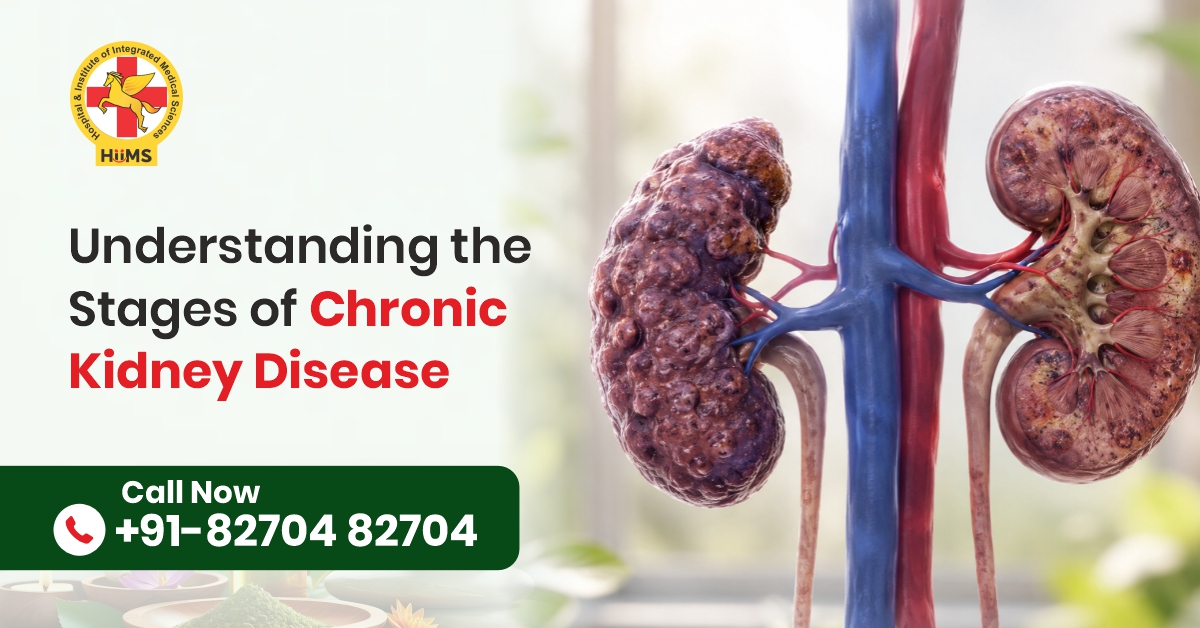

When the kidneys lose their ability to filter waste products, toxins, and excess fluids from the blood, it can lead to chronic kidney disease. When the organs fail to function properly, metabolic waste builds up in the body, leading to systemic complications that affect your heart, bones, and energy levels.
Many people believe that structural organ damage is completely irreversible and that dialysis or a transplant is the only ultimate option. However, an integrated approach that targets the root cause of metabolic failure can slow, halt or even reverse the progression of the disease. At HiiMS, combining traditional Ayurveda, naturopathy, and targeted dietary protocols works to revive damaged renal tissues without relying purely on invasive measures. In this blog, we will explore the stages of this condition and the recovery path.
What is chronic kidney disease?
Chronic kidney disease is the progressive loss of kidney function over a period of months to years. The kidneys are made up of millions of tiny filtering units called nephrons. When these nephrons are undergoing chronic inflammation or physical trauma typically from uncontrolled high blood pressure, diabetes, or chemical toxicity, they are not able to filter blood effectively.
Doctors track the progression of this disease using the estimated glomerular filtration rate (eGFR). It looks at levels of waste markers such as serum creatinine. It then calculates how many mL of blood the kidney can clean per minute. Normal is usually around 90 mL/min or higher. The lower the number, the more advanced the stages of structural damage.
The 5 Progressive Stages of Kidney Decline
The progression of renal decline is divided into five distinct stages. Identifying the exact stage allows for highly targeted, bio-individual medical interventions.
Stage 1: Kidney Damage with Normal or High Function (eGFR: 90 or more)
In the first stage there is structural damage of the kidney, but the general filtering capacity is normal. Stage 1 usually has no physical symptoms. It is often discovered incidentally on routine urine tests showing trace amounts of protein (albuminuria) or blood pressure measurements that are beginning to rise.
Stage 2: Mild Loss of Kidney Function (eGFR: 60 to 89)
Stage 2 means the kidneys have a mild loss of ability to filter out waste. Physical symptoms are rarely stated, as in the first stage. But the kidneys are certainly working harder to flush out metabolic waste. At this stage it’s important to stabilize blood sugar, reduce vascular inflammation, and balance fluid to prevent further cell breakdown.
Stage 3: Moderate Loss of Kidney Function (eGFR: 30 to 59)
Stage 3 is a significant shift; symptoms begin to appear physically. It is often subtyped into two categories:
- Stage 3A (eGFR 45-59): Mild-moderate loss of function. The patient may start to feel tired for no reason, mild pain in the lower back near the kidneys, and early symptoms of fluid retention in the feet.
- Stage 3B (eGFR 30-44): Moderate to severe loss of function. When waste material accumulates in the blood, symptoms become more obvious. Patients may have changes in the frequency of urination, muscle cramps due to electrolyte disturbances, and persistent swelling of the hands and ankles. It is important to see a specialist in kidney disease treatment at this point to prevent the progression towards total organ failure.
Stage 4: Severe Loss of Kidney Function (eGFR 15 to 29)
Stage 4 is serious structural damage. Now the kidneys are seriously compromised in their ability to filter toxins, balance electrolytes, and regulate blood pressure. Symptoms include severe tiredness, loss of appetite, nausea, metallic taste in the mouth, and significant fluid retention. That is the point where conventional medicine begins to prepare the patient for artificial filtration or surgery.
Stage 5: Kidney Failure / End-Stage Renal Disease (eGFR: less than 15)
In Stage 5 the kidneys have nearly or completely stopped functioning. Toxic waste levels build up rapidly in the blood, a life-threatening condition known as “uremia.” Symptoms are severe and include constant vomiting, extreme shortness of breath from fluid accumulation in the lungs, and profound neurological fatigue.
The HiiMS Philosophy on Kidney Disease Treatment
The clinical approach at HiiMS is entirely different. It aims to stimulate and rejuvenate the body’s natural cellular healing mechanisms.
GRAD System
Here advanced kidney disease treatment relies heavily on the GRAD system. This natural way helps to restore kidney function through three pillars:
- Hot Water Immersion Therapy: Patients are immersed in warm water to the neck. The pressure pushes blood toward the core, letting the heart flush excess salt and fluid naturally. It will lower blood pressure and reduce swelling. The skin serves as a “third kidney” to excrete toxic waste through sweat.
- Head-Down Tilt Therapy: The patient lies on a special bed, which is tilted at a slight angle with the head lower than the feet. Gravity also has the natural effect of increasing blood flow directly to the kidneys and helps to wake up sluggish parts of the organs, increasing their filtering power without straining the body.
- The Disciplined GRAD Diet: This is a living plant-based diet that eliminates processed foods. Early mornings start with fresh hydrating fruits, afternoons with large raw salads to cool the digestive system, and evenings with light natural millets to avoid new toxin formation.
Panchakarma
To address cellular inflammation, HiiMS implements targeted Ayurvedic detox protocols. Therapies such as Nadi Sweda (herbal steam) and Rakta Mokshana (controlled blood purification) are used to clear arterial blockages, reduce oxidative stress in the renal arteries, and calm aggravated Vata and Pitta doshas, which are responsible for structural degradation.
Herbs for Supporting the Kidneys
It is important to support kidney disease treatment with Nature’s Pharmacy. Herbs such as Punarnava help flush out retained fluids and decrease swelling. Gokhru is a mild stimulant that helps to improve the flow of urine. Varun flushes out the internal blockages and keeps the pathways clear and naturally protects kidney function.
Holistic Lifestyle Adjustments
Chronic kidney disease management is actually a healthy daily routine. Sync your sleep with nature’s clock to enhance cellular repair. Walking barefoot on grass helps the body connect with the Earth’s natural energy to reduce inflammation. Simple breathing exercises can calm the nervous system and help stabilize blood pressure.
Conclusion
Navigating the various stages of chronic kidney disease requires proactive, informed medical choices. You do not have to accept a lifetime of mechanical dialysis as your only path. By addressing the root metabolic causes of renal decline through the integrated protocols at HiiMS, it is entirely possible to reduce toxic buildup, stabilize your eGFR, and rebuild your vitality naturally.
If you require specialized kidney disease treatment, you can access Jeena Sikho’s expert medical guidance right from home through the video consultation service. And you can get the right path to start your natural journey toward complete renal recovery

FAQs
1. How many stages are there in chronic kidney disease?
Chronic kidney disease is generally divided into five stages, based on how well the kidneys are able to filter waste from the blood.
2. What symptoms may appear as kidney disease progresses?
People may notice fatigue, swelling in the feet or ankles, changes in urination, muscle cramps, or a gradual loss of appetite as kidney function declines.
3. What is eGFR, and why is it important?
eGFR is a measurement used to estimate how effectively the kidneys are filtering blood and helps doctors determine the stage of kidney disease.
4. How does the GRAD System support kidney wellness at HiiMS?
The GRAD system combines therapies, dietary changes, and lifestyle practices aimed at supporting kidney function and overall well-being naturally.
5. Which Ayurvedic herbs are commonly used to support kidney health?
Herbs such as Punarnava, Gokhru, and Varun are traditionally used in Ayurveda to support urinary health, fluid balance, and kidney function.
Ayurvedic Kidney Care Products
100% natural, certified Ayurvedic formulations crafted for targeted kidney wellness.



Disclaimer: The information provided on this blog is for general educational and informational purposes only. It is not intended to replace professional medical advice, diagnosis, or treatment. Always consult a qualified healthcare professional before making any changes to your diet, lifestyle, or treatment plan. Individual results may vary.





1 comment