

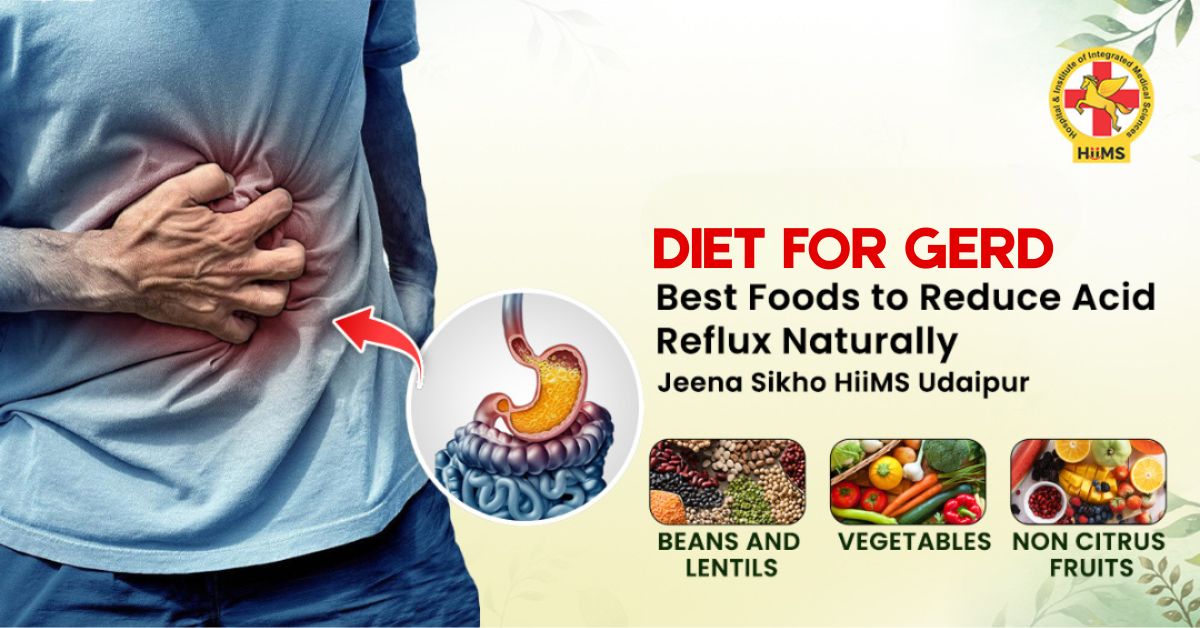
Diet for GERD – GERD, or Gastroesophageal Reflux Disease, happens when stomach acid comes up into the throat and causes discomfort. People often feel burning in the chest, a sour taste in the mouth, or heaviness in the stomach.
At first, these symptoms may seem small, so many ignore them. Untreated GERD can disrupt sleep, appetite, and daily life. A proper diet can calm the stomach and ease acid reflux naturally.
At Jeena Sikho HiiMS Udaipur, we focus on simple and natural ways to improve digestion and reduce acidity. A good Diet for GERD is not about strict rules.
It is about knowing which foods help and which make symptoms worse. Eating regularly, avoiding late-night meals, and choosing gentle, home-cooked food can help a lot.
This blog will share the best foods to eat, foods to avoid, and tips for a healthy acid-reflux diet.
What Is GERD In Diet for GERD?
GERD is a condition where stomach acid moves up into the esophagus. This acid can irritate the throat and cause a burning feeling. Many call it heartburn, but if it happens often, it is called GERD. It usually happens due to bad eating habits, stress, or weak digestion.
Why Diet For GERD Is Important
Food plays a big role in GERD. Eating heavy, fried, spicy, or oily food can make acid reflux worse. Skipping meals or eating too fast can also increase acid.
Following the right diet for GERD can help digestion work better and reduce irritation. Small, regular meals and simple, home-made food support the stomach naturally.
Ayurvedic Perspective on Diet for GERD
According to Ayurveda, GERD happens when the body’s pitta (fire energy) in the stomach becomes too high, causing excess acid. Ayurveda believes that food and lifestyle play a very important role in controlling this problem.
A Pitta-balancing diet for GERD includes cooling, light, and easily digestible foods like bananas, melons, cucumber, spinach, and buttermilk. Spicy, oily, fried, and very sour foods should be avoided.
Having light meals regularly, drinking warm water, and adding fennel or ginger supports digestion and keeps acidity low.
Foods That Help Prevent Acid Reflux
Including certain foods in your diet can naturally reduce acid reflux and soothe the digestive system.
- High-fibre foods: oatmeal, brown rice, sweet potatoes, carrots, green beans.
- Alkaline foods: bananas, melons, cauliflower, fennel, nuts.
- Watery foods: cucumber, celery, lettuce, watermelon, herbal teas.
- Low-fat dairy: skim milk, low-fat yogurt (soothes the stomach).
- Ginger: anti-inflammatory, eases digestion.
- Apple cider vinegar (diluted) & lemon water: can help neutralize stomach acid.
Choosing the right foods plays a key role in managing GERD. Regularly eating these gentle, easy-to-digest foods can help prevent acid reflux, improve digestion, and promote overall digestive comfort naturally.
Recommended Diet for Acid Reflux by Jeena Sikho, HiiMS Udaipur
Jeena Sikho HiiMS recommends the DIP diet, which focuses on fruits, vegetables, and light home-cooked meals. This diet eases digestion and helps the body heal naturally.
Disciplined & Intelligent Person’s Diet (DIP Diet)
| Plate | Breakfast (7-9 AM) | Lunch (1-2 PM) | Dinner (Before 7 PM) |
| Plate 1 | Have 3 to 5 seasonal fruits daily, around 10 grams for every kilogram of your weight. | Fresh salad with 3–5 kinds of vegetables | Have a combination of fruits and raw salad, about 5 grams per kilogram of your weight. |
| Plate 2 | Simple millet-based foods such as upma, daliya, and poha | Simple home-made foods such as khichdi, chapati, or millet daliya | Fresh vegetable soup made at home |
| – | – | – | If a meal is missed, eat 10 grams of seasonal fruits and salad for every kilogram of your weight. |
Important: Eat Plate 2 right after Plate 1 without any gap to help digestion and reduce acidity.
A simple, natural diet plan by Jeena Sikho HiiMS Udaipur that combines fruits, vegetables, and light home-cooked meals to ease digestion and reduce acid reflux.
Home Remedies for Acidity That Aid Digestion
Many turn to simple home remedies for acidity because they are easy to include in daily routines. Some common methods are:
- Amla to cool the body internally.
- Jeera water to promote healthy digestion.
- Coconut water for a calming, soothing effect.
- Coriander or mint infusion for gentle cooling.
- Chewing fennel seeds or roasted cardamom after meals
- Drinking warm water in the morning
- Light herbal teas without caffeine
When followed consistently, these practices can help reduce the severity of acidity over time, support your GERD diet, and naturally lower acid reflux.
Foods to Avoid in GERD
Some foods make acid reflux worse. These foods to avoid in GERD are:
- Spicy and fried foods
- Coffee and caffeinated drinks
- Soda and carbonated drinks
- Tomatoes and citrus fruits
- Chocolate and mint
- Alcohol
Avoiding these foods helps your best diet for GERD work better and keeps you comfortable.
Tips for Eating with GERD
- Eat smaller meals more often instead of 2–3 large meals.
- Do not eat late at night or right before bedtime.
- Chew food slowly and eat in a calm setting.
- Drink water between meals, and avoid drinking too much during meals.
- Sit upright for 20–30 minutes after eating.
These simple steps support your GERD diet and reduce acid reflux naturally.
Conclusion
Following the right GERD diet helps lower acid reflux and keeps the stomach healthy. Staying away from trigger foods, choosing simple home-cooked meals, and eating small portions regularly can make a big difference. Along with this, natural remedies and healthy habits make a big difference.
At Jeena Sikho HiiMS Udaipur, we help patients follow the best diet for GERD and improve digestion naturally. With regular care, GERD symptoms can be controlled, and long-term comfort and health can be achieved. Contact us at +91 86999-88093 or email care@jeenasikho.com
FAQs
Q1. Which foods help GERD?
Ans. Eat fruits, vegetables, light home-cooked meals, salads, and soups.
Q2. Any simple home remedies?
Ans. Amla, jeera water, coconut water, fennel seeds, and herbal teas can help.
Q3. Which foods should be avoided?
Ans. Avoid spicy, fried food, citrus, coffee, soda, chocolate, and alcohol.
Q4. Tips for eating with GERD?
Ans. Eat small, frequent meals, avoid late-night eating, chew slowly, and stay upright after meals.
Q5. Can drinking water help with GERD?
Ans. Drinking water between meals helps digestion and reduces acidity.
Disclaimer: The information provided on this blog is for general educational and informational purposes only. It is not intended to replace professional medical advice, diagnosis, or treatment. Always consult a qualified healthcare professional before making any changes to your diet, lifestyle, or treatment plan. Individual results may vary.