
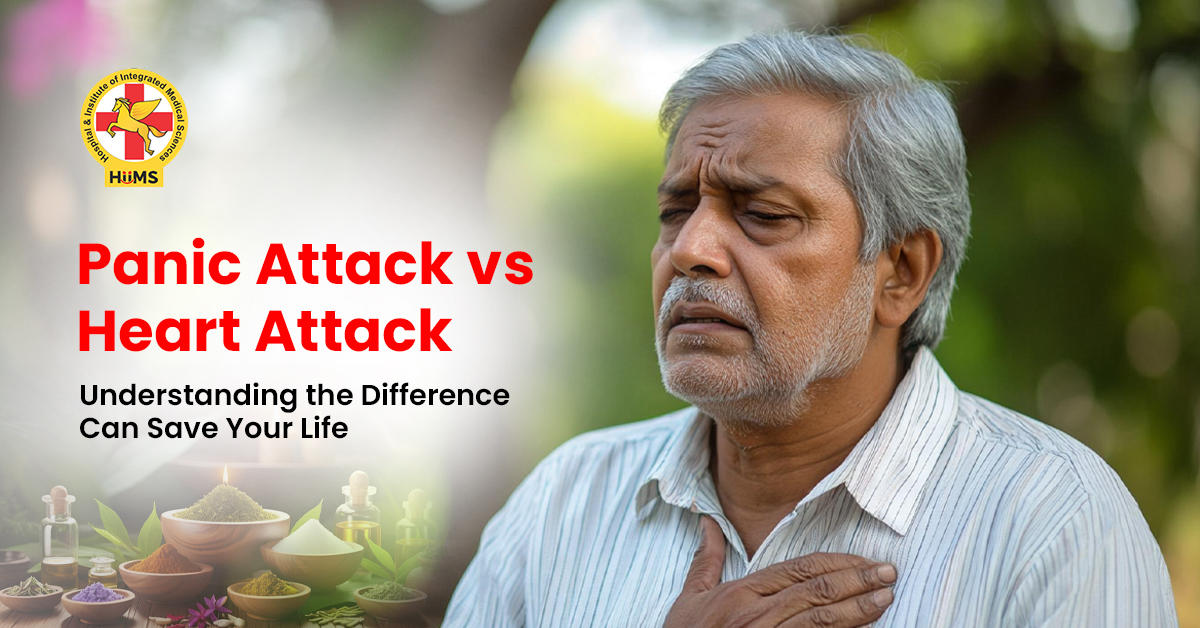
Sudden chest discomfort can scare anyone. Sometimes the heart starts beating fast. Breathing feels heavy. Hands may sweat. The mind feels restless. At that moment, many people ask the same question again and again—is this a panic attack or a heart attack?
The confusion between Panic Attack vs Heart Attack is very common in daily life. Panic attacks feel very strong, but they are usually linked to stress. Heart attacks may start slowly and quietly. Some people ignore early heart attack symptoms, thinking it is only anxiety or tension. Others panic quickly even when the heart is fine. Both situations can be risky. Knowing the difference helps you react calmly and correctly.
At Jeena Sikho HiiMS, doctors often see patients who waited too long or worried too early. This blog explains the difference in simple words, so you can understand what your body may be telling you.
What Happens During a Panic Attack
A panic attack comes suddenly. It can happen at home, at work, or even while resting. The body reacts strongly, even when there is no real danger. The heart beats fast, breathing feels difficult, and fear rises quickly.
You may notice trembling, sweating, dizziness, or a feeling of losing control. Many people feel they might faint or die. Still, the heart structure is usually normal. Panic attacks are linked to stress, anxiety, and emotional pressure. They feel dangerous, but they are not life-threatening.
What Happens During a Heart Attack
A heart attack happens when blood supply to the heart muscle reduces or stops. This damages the heart tissue. Unlike panic attacks, heart attacks do not always come with sudden fear.
Some people feel pressure or heaviness in the chest. Pain may spread to the arm, shoulder, jaw, or back. Breathing may feel uncomfortable. Nausea or extreme tiredness may appear. In people with existing heart disease, symptoms may be mild at first. That is why early heart attack treatment becomes very important.
Key Symptoms You May Notice
Signs often seen during a panic attack
- Sudden fear or anxiety
- Fast heartbeat
- Sweating or shaking
- Shortness of breath
- Feeling dizzy or disconnected
Signs often seen during a heart attack
- Chest pressure or tightness
- Pain moving to left arm or jaw
- Breathlessness
- Cold sweating or nausea
- Unusual tiredness
Sometimes symptoms look similar. That is where confusion begins.
Main Reasons Behind These Conditions
Common reasons for panic attacks
- Long-term stress
- Anxiety problems
- Emotional strain
- Disturbed sleep
Common reasons for heart attacks
- Blocked blood vessels
- High blood pressure
- Diabetes
- Smoking
- Long-standing heart disease
The causes are different, but the body signals may overlap.
Panic Attack vs Heart Attack: How They Feel Different
A panic attack usually starts suddenly and reaches peak fear quickly. The discomfort may reduce when the person calms down or rests. Breathing slowly often helps.
A heart attack usually worsens with time. Pain may not reduce with rest. Walking or climbing may increase discomfort. Symptoms stay or grow stronger. When in doubt, medical help should not be delayed. It is always better to be safe.
What to Do During a Suspected Heart Emergency
If someone is around, the person should lie down safely. Chewing fresh ginger may help circulation for a short time. Pressing calf muscles gently and applying pressure on palm points may support blood flow until help arrives.
If alone, sitting upright with back support helps reduce heart strain. Chewing ginger and calling for help immediately is important. These are only supportive steps. Hospital care is still needed.
Ayurvedic View on Heart Care
Ayurvedic care aims to strengthen the heart and maintain body balance. Arjuna and similar herbs are used to support heart muscle health. Ashwagandha helps control stress. Guggulu supports blood vessels.
Diet and routine matter a lot. Eating light meals, avoiding too much oily food, walking daily, doing yoga, and sleeping well all help the heart stay relaxed. Regular check-ups are helpful in detecting the heart disease symptoms in the initial stage.
Daily Habits That Help Prevent Heart Problems
Small habits make a difference over time. Eating fresh home food, staying away from too much fried food, and managing stress really helps. Walking every day keeps the blood circulation active. Smoking and alcohol should be avoided. Regular check-ups help in the early detection of heart disease symptoms.
Care for More Than One Health Problem
At Jeena Sikho HiiMS, doctors treat more than just one problem. Along with panic and heart issues, they also manage cancer, liver disease, infertility, jaundice, and more. This wider care helps patients with multiple health concerns.
Conclusion
Knowing the difference between Panic Attack vs Heart Attack can truly save lives. Panic attacks feel severe but are not dangerous. Heart attacks may feel mild but can be serious. Recognising early heart attack symptoms, staying alert, and acting on time makes all the difference.
If there is confusion, medical advice should be taken without delay. At Jeena Sikho HiiMS, patients receive guidance to manage heart disease, reduce risk, and protect overall health. Do not wait or guess. Book a consultation at Jeena Sikho HiiMS today and take a responsible step towards heart safety.

FAQs
Q1. Can panic attacks damage the heart?
The heart is not damaged directly during panic attacks.
Q2. Can a heart attack happen without pain?
Some heart attacks are mild or silent, and symptoms may not be clearly felt.
Q3. Should I ignore chest pain if it passes?
No, chest discomfort should always be checked.
Q4. Can stress cause heart problems?
Yes, long-term stress affects heart health.
Q5. Are lifestyle changes really helpful?
Daily habits play an important role in preventing health problems.
