
Our eyes are very delicate, and even a small issue can disturb our daily routine. There is one condition that many people are still not very aware of, and that is thyroid eye disease. It is linked with thyroid problems, especially when the thyroid gland becomes overactive. In this situation, the tissues around the eyes get affected, which can lead to visible changes and discomfort.
A lot of people ignore the early signs, thinking it is just tiredness or simple eye strain. But knowing the early symptoms of thyroid eye disease can help you take the right step at the right time. This condition often starts slowly but may get worse if not taken seriously.
In this blog, we will explain everything in a very easy way—what it is, why it happens, how to notice it, and what care options are available. If you or someone around you is seeing unusual changes in the eyes, this guide will help you understand the situation better and make the right decision.
What Is Thyroid Eye Disease?
It is a condition where the immune system affects the muscles and tissues around the eyes. It is mostly seen in people who have thyroid disorders, especially Graves’ disease.
In this condition, the body mistakenly attacks its own tissues. This causes swelling, inflammation, and changes in the eye area. Over time, the eyes may look different and may not function properly.
It usually develops in two phases—an active phase (when symptoms are growing) and a stable phase (when symptoms stop worsening but may leave changes behind).
Causes of Thyroid Eye Disease
The main cause of thyroid eye disease is an autoimmune reaction. This means the body’s defense system starts attacking healthy tissues.
Some common factors include:
- Overactive thyroid (hyperthyroidism)
- Graves’ disease
- Smoking (which can make the condition worse)
- Family history of thyroid problems
This condition does not happen overnight. It develops slowly and may show different symptoms in different people.
Early Symptoms You Should Not Ignore
Recognizing the early symptoms of thyroid eye disease is very important if you want to take care of it on time.
Some early signs include:
- Dryness or irritation in the eyes
- Redness and swelling
- Feeling of pressure behind the eyes
- Sensitivity to light
- Mild puffiness around the eyes
At first, these symptoms may not feel serious and are often ignored, but with time, they can slowly become more noticeable and difficult to manage if not taken seriously.
Common Signs and Changes in Eyes
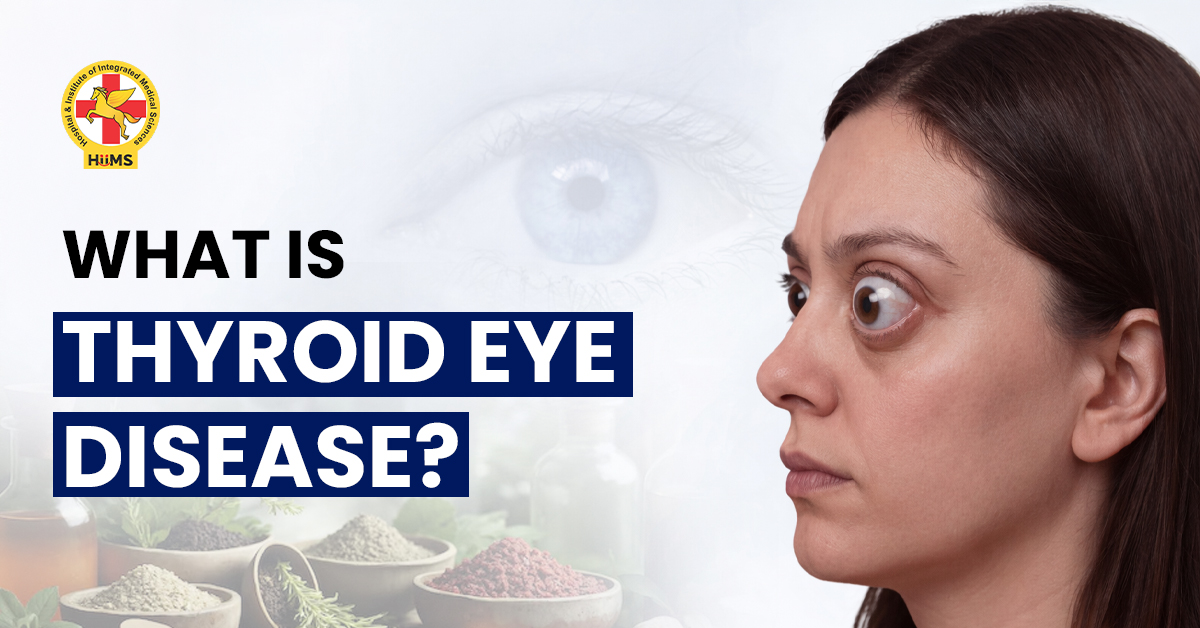
As the condition moves forward, the symptoms become easier to notice. One of the most noticeable signs is bulging eyes, where the eyes appear to come forward from their usual position.
Other symptoms may include:
- Double vision
- Difficulty in closing the eyes fully
- Pain while moving the eyes
- Blurred vision
- Increased tearing or dryness
Because of these changes, both vision and overall comfort get disturbed, and daily routine tasks may not feel as easy as before.
Diagnosis of Thyroid Eye Disease
Understanding bulging eyes thyroid disease usually begins with a careful look at the eyes and overall health. Doctors observe visible changes like swelling, redness, or eye movement issues, and also understand your thyroid condition history.
In an Ayurvedic approach, attention is also given to body balance, digestion, and lifestyle patterns. These small details help in understanding the root cause.
Early identification makes it easier to manage the condition naturally and avoid further discomfort.
Ayurvedic & Natural Care for Thyroid Eye Disease
There are different thyroid eye disease treatment options, but many people also look for natural and Ayurvedic ways to manage it.
Some commonly followed approaches include:
- Herbal support to balance thyroid function.
- Natural eye care practices to ease dryness.
- Gentle detox therapies to clear internal imbalance.
- Stress management through yoga and breathing.
Simple lifestyle habits like avoiding smoking and following a clean diet play a big role in recovery.
Daily Care and Management Tips
Managing thyroid-related eye disorders is not just about treatment; daily care is also very important.
Simple tips include:
- Wear sunglasses to protect your eyes from sunlight.
- Keep your head slightly elevated while sleeping.
- Avoid smoking.
- Make sure you follow what your doctor has advised you.
These small steps can make a big difference in comfort and recovery.
When Should You See a Doctor?
Do not ignore it or wait too long if you notice:
- Sudden vision problems
- Severe eye pain
- Increased swelling or redness
- Difficulty in eye movement
Early consultation can prevent serious complications and help keep the condition under control.
Conclusion
Thyroid eye disease is not something you should ignore, even when the symptoms feel mild in the beginning. It has a strong connection with thyroid health and can slowly affect both how your eyes look and how well you see. Understanding the early symptoms and taking the right steps at the right time can help prevent the condition from getting more serious.
With proper diagnosis, the right thyroid eye disease treatment options, and simple daily care, many people are able to manage their condition well. If you notice signs like bulging eyes or discomfort in your eyes, it is better to consult a doctor without delay. Early care always leads to better results and a more comfortable life.
Also Check: The Best Eye Hospitals in India
FAQs
1. What happens to the eyes in this condition?
The tissues around the eyes become swollen, which can change how the eyes look and feel.
2. Is it related to thyroid problems?
Yes, it is commonly seen in people who have a thyroid imbalance.
3. Can it affect both eyes?
Yes, in most cases, both eyes are affected, but one eye may be more noticeable.
4. Is it a serious condition?
It can become serious if ignored, especially if vision starts getting affected.
5. Can it affect vision permanently?
If not managed on time, it may lead to long-term vision problems.