
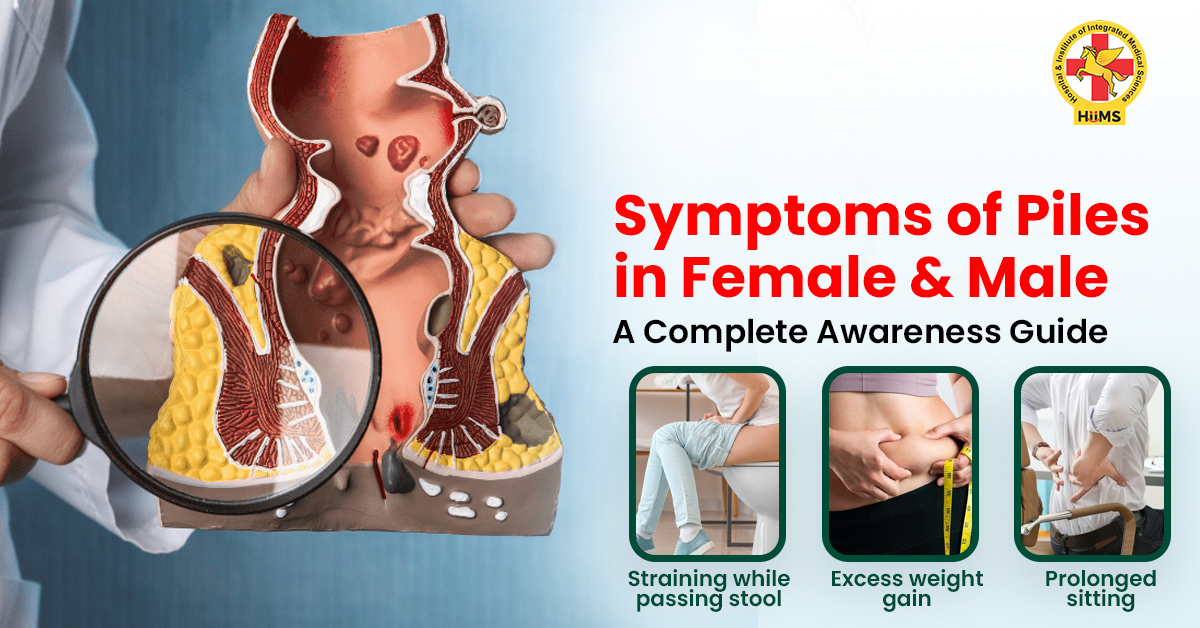
Most people don’t like talking about piles. It feels awkward, so the early signs are ignored. One day there’s slight itching, the next day a bit of burning, and sometimes a drop of blood you try to forget about. But piles don’t happen suddenly. They grow slowly, and the body keeps giving small hints. We just don’t notice them.
This guide explains the piles symptoms seen in both women and men, how they show up in daily life, and what early warnings you should take seriously. The idea is simple: understand the problem early, fix it early.
What Are Piles?
Piles are those areas around the anus that have swollen veins They commonly happen because of:
- Constipation
- Straining while passing stool
- Sitting for long hours
- Pregnancy
- Heavy lifting
- Low-fibre diet
Types of Piles
Internal piles: Usually painless; bleeding is the main sign.
External piles: More painful; swelling and irritation are common.
Thrombosed piles: Hard, bluish lump with severe pain.
Male Piles Signs and Female Piles Signs
These symptoms of piles are seen in both genders:
Bleeding: Bright-red blood on toilet paper, in the pot, or on the stool.
Lumps: A small soft swelling near the anus, tender if it’s an external pile.
Itching: A constant scratchy or burning feeling around the anus.
Pain: Pain while passing stool; sitting on hard surfaces increases discomfort.
Mucus leakage: A sticky fluid may come out, making the underwear feel slightly wet.
Incomplete evacuation: Feeling that the bowels didn’t empty completely.
Symptoms of Piles in Female
These piles symptoms in women may become stronger due to hormonal changes, pregnancy, or long sitting hours:
- More itching before periods
- Soreness while sitting on hard chairs
- A small lump coming out after stool
- Slight wetness or leakage causing discomfort
- Burning or stinging while passing stool
- Bleeding after straining
Symptoms of Piles in Male
Here are the common piles symptoms in men:
- Sharp pain during stool
- Fresh blood on toilet paper
- Tender swelling near the anus
- Irritation while sitting long hours
- Constant itching around the anal area
- A heavy feeling near the anus after using the toilet
How Jeena Sikho HiiMS Kota Helps in Piles Healing
At Jeena Sikho HiiMS Kota, the focus is not just on reducing itching or pain. The real aim is to correct what is happening inside-poor digestion, old constipation, wrong habits, and constant pressure on anal veins.
Their approach is natural, gentle, and aims for long-term relief.
Basti Therapy (Medicated Enema)
Warm herbal oil or decoction is gently given through the rectum.
It helps soften stools, calm irritation, reduce swelling, and make bowel movements smooth. It also supports digestion and helps with chronic constipation.
Kshar Sutra Therapy
A special herbal-coated thread is tied around the pile mass.
It slowly shrinks the pile in a clean and natural way.
This therapy:
- Reduces infection
- Shrinks the pile slowly and safely
- Has quicker recovery
- Helps in chronic piles, fissures, fistula
Diet & Lifestyle Support
Foods that help: papaya, figs, leafy greens, warm lemon water, fennel, cumin, ginger tea, small amounts of olive/sesame oil.
Avoid: Spicy, oily food, heavy dairy, red meat, alcohol, fizzy drinks, too much tea/coffee, and holding stools.
Conclusion
Piles are uncomfortable, but they’re treatable. Knowing the signs early, especially the small ones we often ignore, helps you heal faster and avoid complications.
If the discomfort is affecting your daily life, don’t wait. Gentle, natural care can bring real relief. Contact us today to book a consultation at 95836-95830 or email us at care@jeenasikho.com. One short conversation may give you the clarity and comfort you’ve been delaying.

FAQs
1. Can early piles go away on their own?
A: Mild piles often settle if you increase fiber, drink more water, and avoid straining.
2. Why do many women get piles during pregnancy?
A: Pregnancy puts extra pressure on the lower veins, which can cause itching, swelling, and slight bleeding.
3. Are piles and fissures the same?
A: Fissures are tiny cracks or tears in the skin near the anus.
4. What foods make piles worse?
A: Foods that are too spicy, too oily, or junk in general can make the pain and burning worse. Eating meals with very little fiber can also make the stool hard and difficult to pass.
5. When should I visit a doctor for piles?
A: If bleeding continues, pain gets worse, a lump becomes hard, or home remedies stop helping-see a doctor immediately.