
Most people hear the words “heart attack” and “cardiac arrest” and think they are the same thing. The names sound similar, so the mix-up happens easily. But inside the body, both problems are very different. Yes, both are serious. Yes, both can be life-threatening. But the way they occur is different. When people don’t understand this difference, they often delay action or respond the wrong way, which can make the situation worse.
This blog is written to clear that confusion. It explains cardiac arrest vs heart attack in very simple words and also talks about what actually goes wrong in the heart, how the body starts giving signals, and why those signs are often ignored. It also explains why acting early matters more than most people realize.
You’ll also read about common heart attack symptoms and early signs of a heart attack that many people generally ignore as stress or tiredness. This is about understanding, not scaring anyone. It is to help people understand their heart better so they feel calmer, clearer, and more confident about getting help when it’s needed.
Cardiac Arrest vs Heart Attack: What’s the Real Difference?
People often get confused between these two conditions. Let’s understand them in a simple way.
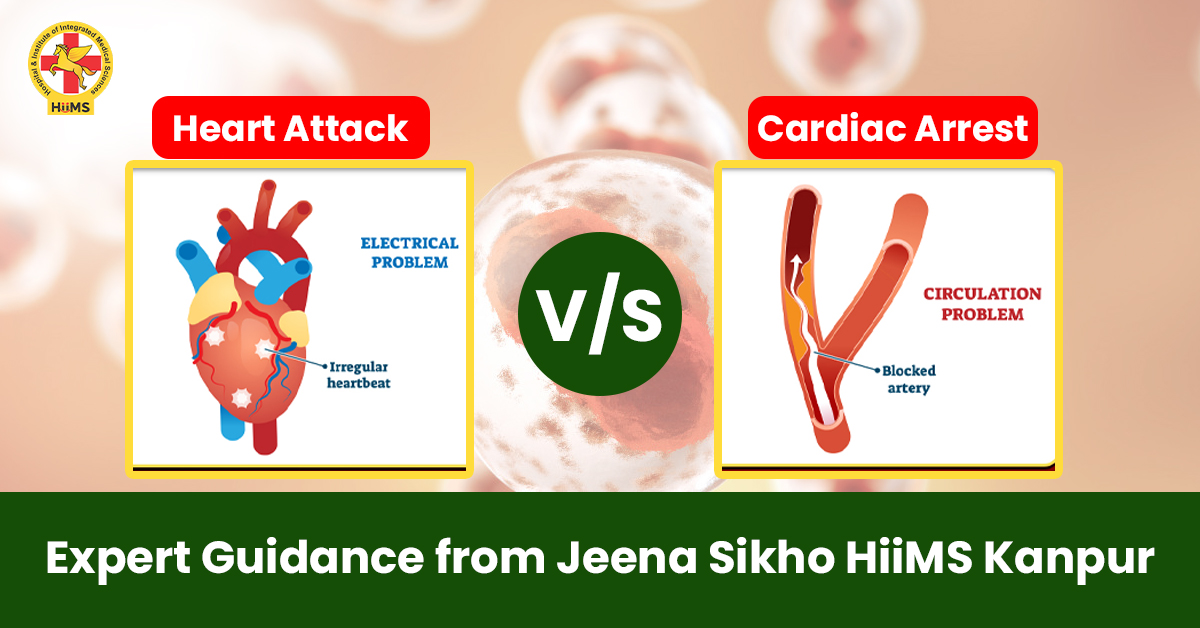
Heart Attack: A heart attack happens when blood is unable to flow properly to the heart. This usually happens because a blood vessel gets blocked by fat or a clot. When blood flow slows or stops, that part of the heart does not get enough oxygen. Over time, this causes damage.
- During a heart attack, the heart often continues to beat.
- There is often some time to reach the hospital.
- It is mainly a blood flow problem, not an electrical one.
Cardiac Arrest: Cardiac arrest happens very suddenly. The heart stops beating because its electrical system stops working properly. Blood flow to the brain and body stops at once.
- The person collapses suddenly.
- There is no pulse and no breathing.
- It needs immediate CPR and emergency care.
In simple words, a heart attack is about blocked blood flow, and cardiac arrest is about the heart stopping suddenly.
Heart Attack Symptoms You Must Know
Symptoms do not follow one fixed pattern. They may come suddenly or grow gradually over time. Some people notice mild discomfort and don’t take it seriously. Others mistake it for gas or stress. This is why knowing the signs is so important. Chest pain or pressure that feels heavy, tight, or uncomfortable is a common sign of a heart attack.
6 Signs of Heart Attack A Month Before
The body often gives small warnings weeks before a heart attack. These signs are easy to miss. Here are 6 signs of a heart attack that people should not ignore a month before:
- Chest heaviness that comes and goes.
- Breathing trouble during simple activities.
- Feeling tired even after proper rest.
- Irregular heartbeat or sudden palpitations.
- Poor sleep or unexplained anxiety.
- Pain in the back, jaw, or stomach area.
These signs do not always mean a heart attack. But if they are new or increasing, a heart check is important.
How Jeena Sikho HiiMS Kanpur Supports Heart Health
Jeena Sikho HiiMS Kanpur follows an Ayurvedic approach that focuses on cleaning the body, supporting the heart, and improving blood flow. Doctors at Jeena Sikho HiiMS Kanpur highlight that fast response improves chances of recovery and reduces long-term damage.
- Panchakarma, and especially therapy like Hridaya Basti, helps clear toxins linked to circulation issues.
- Diet and lifestyle advice is kept simple, so people can actually follow it day to day without forcing anything.
- Before giving any herbs, they first understand what the body actually needs and what it’s trying to fight off.
- Light yoga and easy breathing exercises are used to help the body relax and keep blood moving.
Treatment is planned one-on-one, based on how the person is feeling and what they can handle.
Conclusion
Heart problems don’t always start with pain or panic. Most of the time, they begin quietly and slowly get worse. Knowing the difference between cardiac arrest vs heart attack helps people react faster when it really matters. Small signs may not look serious at first, but when they keep showing up, they should not be ignored.
If something about your heart feels off, or your body is acting in a way that doesn’t feel normal, don’t ignore it. Getting it checked early is usually the smarter move. A small check now can save a lot of worry later. You can talk to the care team at Jeena Sikho HiiMS Hospital Kanpur and understand what’s going on before things turn serious.
Call: +91-8792087920
Email: care@jeenasikho.com
FAQs
Q1. Is cardiac arrest the same as a heart attack?
Ans. A heart attack is caused by blocked blood flow. Cardiac arrest happens when the heart stops suddenly.
Q2. Can a heart attack lead to cardiac arrest?
Ans. It can happen sometimes. A heart attack can disturb the heart enough to cause cardiac arrest.
Q3. Can young people get heart attacks?
Ans. Heart problems are not limited to age. Health habits and lifestyle also matter.
Q4. What should I do if chest pain comes and goes?
Ans. If chest pain keeps returning, it’s better to get it checked instead of ignoring it.
Q5. Can lifestyle changes help heart health?
Ans. Simple daily habits play a big role in keeping the heart healthy.