

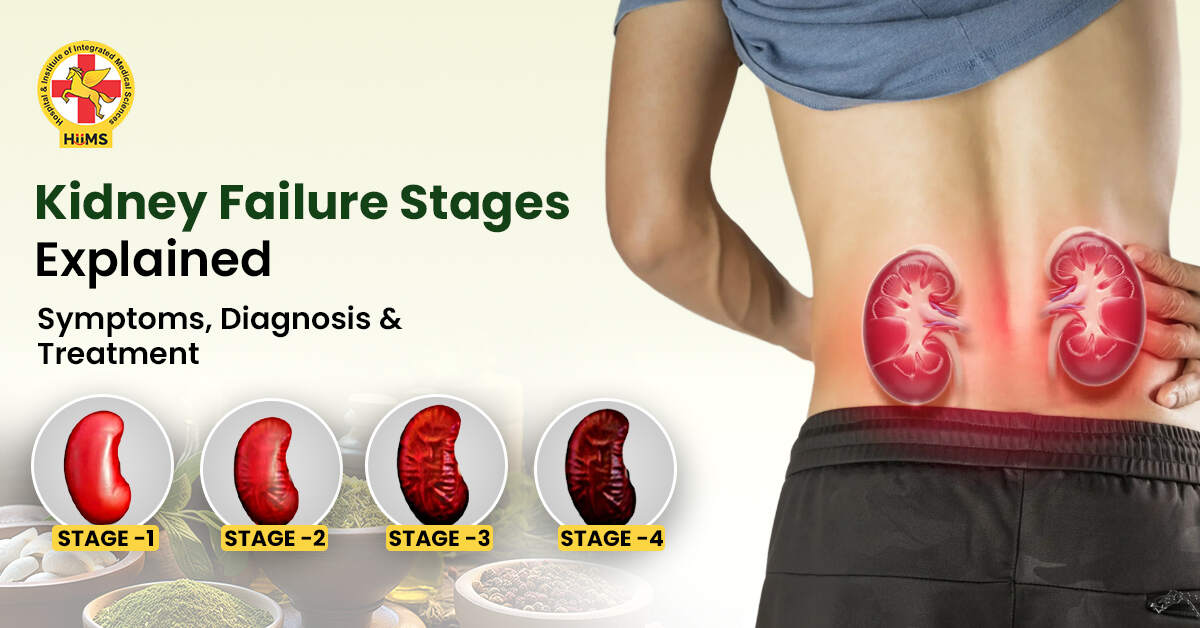
There’s something strangely quiet about kidney problems. They don’t hit you like a migraine or a high fever. They don’t demand attention. Instead, they start deteriorating gradually, without any big signs. You may start feeling tired more often, but you shrug it off. Maybe your legs feel a bit swollen after a long day, but who doesn’t feel that at times? The colour of your urine looks a bit unusual, but unless it burns or hurts, most people don’t really think about it.
That’s how kidney issues hide themselves. And that’s exactly why understanding kidney failure stages matters so much. When you know what’s happening inside your own body, you get the power to do something about it—early, calmly, without panic.
This blog gently takes you through the stages, symptoms, diagnosis, and treatment, along with how Ayurveda—especially at Jeena Sikho HiiMS Ayurvedic Hospital Bhopal—supports healing in a way that feels comforting rather than intimidating.
What Is Kidney Failure?
Kidney failure doesn’t come with clear signs at first. It’s a slow fade-out of the kidneys’ ability to filter waste and extra fluid from your blood. The kidneys, which normally work quietly in the background, start getting tired, overloaded, and gradually stop keeping up with the body’s demands.
To understand it simply:
- The kidneys can’t clean the blood efficiently
- Toxins and fluids start collecting in the body
- The early stages barely show symptoms
- Blood pressure, minerals, and fluid levels get imbalanced
- Advanced stages may need dialysis or a transplant, but they don’t ensure full long-term health.
- Catching it early can prevent years of suffering
What Causes Kidney Failure?
Kidney failure doesn’t appear out of nowhere. It slowly builds up because of things people often live with for years:
- Diabetes or uncontrolled blood pressure
- Frequent long-term use of painkillers
- Chronic infections in the urinary tract or kidneys
- Genetic disorders
- Dehydration, smoking, processed foods
- Also, sometimes just years of small neglect
Understanding the cause and knowing about the kidney failure stages helps shape the right treatment—and sometimes even reverse early damage.
Signs of Kidney Infection and Kidney Failure
Kidney problems show up differently depending on whether it’s an infection (fast, painful) or kidney failure (slow, silent). The body speaks two different languages.
Signs of Kidney Infection (Acute)
An infection arrives like a storm—sudden, noticeable, difficult to ignore:
- Sharp or dull pain on one side of the back
- Burning while urinating
- Cloudy, reddish, or smelly urine
- Fever with chills
- Urge to urinate again and again
- Nausea or discomfort in the belly
This kind needs immediate medical attention.
Signs of Kidney Failure (Chronic)
Kidney failure is quieter and almost too gentle at first:
- Swelling in feet, face, or hands
- Foamy or very dark urine
- Constant tiredness
- Nausea, metallic taste, or loss of appetite
- Itchy or dry skin
- Trouble sleeping
- High blood pressure
- Shortness of breath when fluid collects
Kidney Failure Stages
Kidney failure progresses through five stages, measured using a test called eGFR. Think of these stages as different chapters in how strongly—or weakly—the kidneys are filtering waste.
Stage 1 – Mild Damage
The kidneys are slightly affected, but life feels normal. Most people don’t notice anything. This stage shows up mostly during routine tests—almost like an accidental warning.
Stage 2 – Mild Loss of Function
Kidneys start slowing down. Some people feel:
- Slight swelling
- Mild fatigue
- Small changes in urine colour or frequency
Still easy to ignore, but this is when you should start paying attention.
Stage 3 – Moderate Damage
This is the stage where most people finally realise “something is wrong.”
Symptoms become clearer:
- Constant fatigue
- Swelling around the eyes or ankles
- Back or side pain
- Frequent or foamy urine
- Sleep issues
- Poor appetite
It’s like the body stops whispering and starts speaking up.
Stage 4 – Severe Loss of Function
The kidneys are struggling significantly. Waste builds up faster. Symptoms get heavier:
- Persistent swelling
- Nausea, occasional vomiting
- Breathlessness
- Drastically reduced appetite
- Very noticeable urine changes
This stage needs strict treatment and lifestyle changes.
Stage 5 – Kidney Failure (End-Stage)
This is where the kidneys can barely function.
- Toxins build up
- Fluid overload becomes dangerous
- Energy levels drop sharply
Despite how frightening this sounds, many people find stability with consistent care.
Diagnosis: How Kidney Failure Is Confirmed
Doctors usually run a few simple tests:
- Blood test (eGFR) – measures kidney filtering ability
- Urine test – checks for protein loss
- Ultrasound – examines size and structure
- Blood pressure – because high BP damages the kidneys further
Regular tests can prevent years of suffering.
Kidney Failure Treatment at Jeena Sikho HiiMS Ayurvedic Hospital
Jeena Sikho HiiMS follows a uniquely calming and holistic approach. Instead of just controlling symptoms, the focus is on helping the body detox, strengthen, and reset itself.
At Jeena Sikho HiiMS Hospital, the goal is not just managing kidney disease but helping the body heal, detoxify, and regain balance.
GRAD System
1. Head-Down Tilt Therapy:
In this therapy, the patient is made to lie down at 5, 10, or 15 degrees, where the head is positioned downwards and the legs upwards. This therapy improves the functioning of the kidneys, and patients’ urine output increases.
2. Hot Water Immersion Therapy:
The patient is made to sit in a therapeutic tub filled with hot water (temperature varies as per the patient’s condition, Standard 42).
3. DIP Diet:
The idea is to give the body gentle fuel so digestion doesn’t use up all the energy. Jeena Sikho HiiMS offers a plant-based diet including fruits, vegetables, and millets. A pattern is followed, i.e., of plate 1 and plate 2:
Breakfast (7:00 AM – 9:00 AM)
Plate-1: Includes a meal of body weight × 10 g of Seasonal Fruits (3–5 types)
Plate-2: Any normal home meal or millet recipes—poha, daliya, upma, etc.
Lunch (1:00 PM – 2:00 PM)
Plate-1: Body Weight × 5g Seasonal Vegetable Salad (3–5 types)
Plate-2: This includes your normal home meal or millet recipes—khichadi, chapati, dhokla, and daliya.
Dinner (Before Sunset)
(Without Dinner)
Plate-1: Includes a meal of body weight × 10g of seasonal fruits & vegetable salad (3–5 types).
(With Dinner)
Plate-1: Includes a meal of body weight × 5 g of seasonal fruits & vegetable salad (3–5 types).
Plate-2: Homemade Vegetable Soup
Other Treatments
- Panchakarma Detox: A cleansing therapy is a five-step procedure that eliminates toxins in deep tissues.
- Herbal Support: Medications such as Punarnava, Varun, Gokshura, and Triphala are known to clear excess fluids as well as aid in repairing the kidneys.
- Lifestyle Correction: Sleeping regularly, taking warm water, and doing some light yoga to keep the circulation going.
Conclusion
Kidney failure doesn’t always shout—but your healing doesn’t have to shout either. With early awareness, mindful habits, and supportive therapies from Jeena Sikho HiiMS, it is possible to slow kidney decline, ease symptoms, and bring the body back into balance.
If you or someone you know is dealing with kidney concerns, then don’t wait; contact Jeena Sikho HiiMS Bhopal at +91 77839-77839 or email care@jeenasikho.com. A conversation today can save years of worry tomorrow.

FAQs
1. Can Ayurveda reverse kidney failure?
Early stages respond very well. Later stages can still improve symptoms and quality of life.
2. How does Panchakarma help kidney disease?
It removes toxins, improves circulation, balances doshas, and supports kidney rejuvenation.
3. What diet is best for kidney health?
Fresh fruits, vegetables, low salt, light foods, and alkaline meals, similar to the DIP Diet.
4. Which Ayurvedic herbs help the kidneys?
Punarnava, Gokshura, Varun, Palash, and turmeric.
5. Can lifestyle changes help?
Proper sleep, slow hydration, mindful eating, and stress reduction strongly support the kidneys.